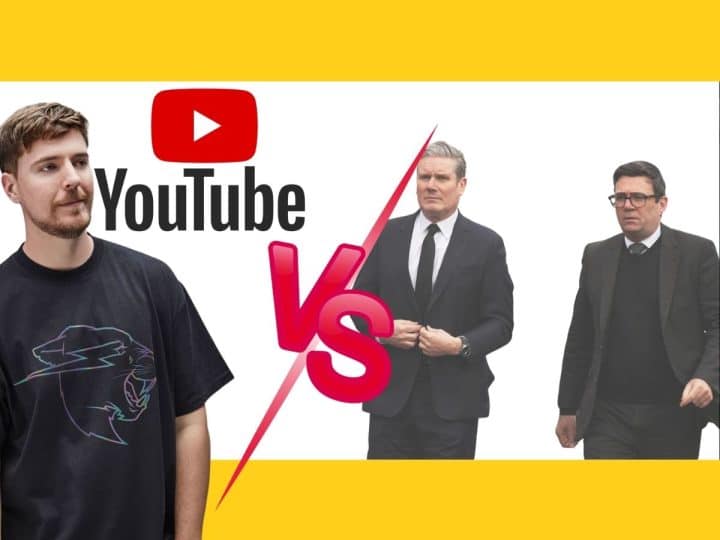
Great Britain is developing a reputation for its opposition to civil liberties and online freedoms. The latest example of this is the government’s plan to turn YouTube into an instrument for disseminating establishment-friendly media:
YouTube says the proposals could require it to put "some channels above others":https://t.co/Ad03iabJqF
— Dexerto (@Dexerto) July 4, 2026
Will Andy Burnham run with this policy when he becomes PM?
Or will he see sense, and realise that taking on a planet full of YouTube creators isn’t going to give his government the propaganda boost they’re anticipating?
Goebbels Mr Bean
The UK government has revealed its plans for a public consultation entitled ‘Watch this space: a new strategic direction for UK media’. It comes after public service broadcasters such as BBC, ITV, Channel 4, and Channel 5 argued that, despite their trusted journalism, social media platform algorithms favor creator content, entertainment or overseas publishers.
“Despite their trusted journalism”, is it?
Meanwhile, the BBC reported the following in June this year:
Trust in the news has fallen to an all-time low globally – the lowest since annual reports by the Reuters Institute began more than a decade ago (2015).
The research published on Tuesday, external suggests that public trust worldwide is at 37%, three points down on this time last year. In the UK, it has fallen by five points to 30% – 20 points lower than 10 years ago.
Why has trust in the media diminished?
The woeful coverage of Israel’s genocide in Gaza can’t have helped. Nor can all the other biases we regularly report on.
Remember seeing the BBC's own article worrying about competing for space on YT. It's an organization that demands respect, doesn't earn it. It demands support with force. Doesn't earn it. Now it demands space, that it has no mandate to hold. https://t.co/jC4uS2qw2T pic.twitter.com/4aETP8v5LZ
— WickedWiz (@WickedWizard15) July 4, 2026
The government is consulting on options, considering whether to make public service news easier to discover on sites like YouTube and TikTok, with greater prominence and with more visibility during periods of major public importance. It also seeks to discuss misinformation and online viewing habits.
If people wanted to watch BBC News, they would watch BBC News. And if Andy Burnham doesn’t immediately drop this, he’s gonna have months of every YouTuber in the world calling him ‘Goebbels Mr Bean’. This will be an interesting scenario for someone as thin skinned as him, to say the least.
Britain versus the world
As Dexerto highlighted, YouTube is rallying its creators to fight this:
Proposed UK rules could control your feed. Keep YouTube Yours.” The message invites creators to learn more information about the proposed rules and submit their responses to the government.
YouTube has always operated on the principle that every creator gets a fair shot. But new UK proposals could change that – requiring us to put some channels above others,” it reads. “This could severely limit your channel’s ability to grow. #KeepYouTubeYours.
We can probably expect YouTube to boost any content which takes the UK government to task. This will mean months and months of negative attention for the government.
YouTube’s audience skews young, too, with most viewers between 18 and 44. Do you know who else skews young? The cohort of people who’ve abandoned Labour for the Greens. And lest we forget, Labour lost four times as many voters to the Greens than any other party around the local elections.
Palestine Deep Dive (PDD) is among those to have spoken out:
Keir Starmer’s Labour government is setting a dangerous precedent.
Instead of confronting the collapse in public trust that has driven millions of people away from legacy media and towards independent journalism online, the government appears intent on using the power of the state to prop up the very institutions the public is rejecting.
Confidence in much of the traditional media has been on the decline, while independent journalism has grown because people are actively seeking alternatives they believe better hold those in power to account and cover stories the mainstream too often overlooks or deliberately buries.
And this is exactly what an authoritarian government looks like: using the power of the state to protect a discredited media establishment while making it harder for independent voices to reach the public.
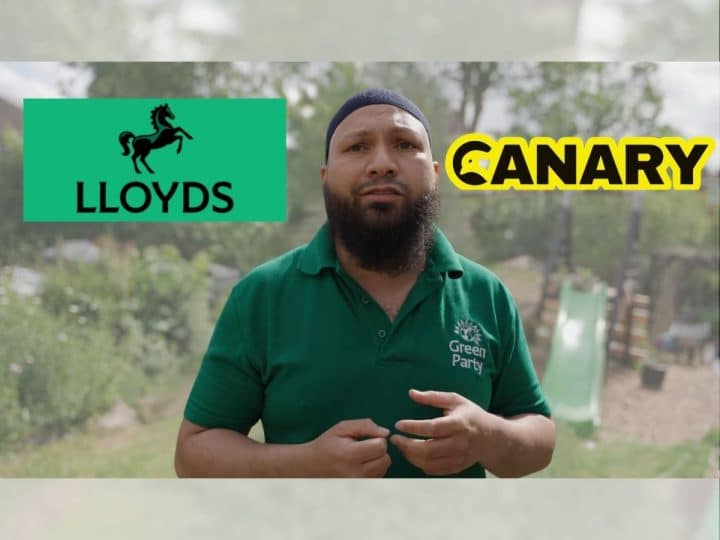
And this is all happening in the same week that independent outlet the Canary reported that we’ve been debanked by Lloyds.
Others also made the connection between the government’s plans and government criticism:
welp, looks like too many off you shared images of mutilated children in Gaza so now only government-endorsed narratives are allowed https://t.co/Kj02mh66Vv
— NJ (@NoJusticeMTG) July 4, 2026
And the broader backlash is only just beginning:
A lot of US creators don’t realize that this proposed UK law would have global consequences, and that powerful censorship groups are pushing very similar policies here https://t.co/AnVW4v0TaW
— Taylor Lorenz (@TaylorLorenz) July 4, 2026
Britaganda on YouTube
Whether it’s the Online Safety Act or proscribing Palestine Action, the UK now has a reputation for being at the forefront of ‘first world’ authoritarianism:
Why is it always the UK
https://t.co/jhzlmJKlDW pic.twitter.com/2eOXMeGpsR
— Kaizen on YT
(@project_kaizenn) July 4, 2026
As we’ve seen, what’s introduced in Britain has a tendency to bleed outwards. The world has wised up to this, which is why every fight from here on out is going to be increasingly bruising for the UK government.
Featured image via the Canary
By Willem Moore