Not every crisis to hit football begins with a refereeing error. Some begin when fans lose faith that the law will have the final say, and when politics fills the space left behind. The latest controversy surrounding Folarin Balogun’s red card is no longer about whether the punishment was right or wrong. It is about whether FIFA’s disciplinary rules can withstand political pressure.
Politics enters the equation
Referees can make mistakes, but the rules have always been the final word. In fact, that was football’s strongest defence against those who suspected something more sinister. Errors are part of the game. However, decisions are ultimately governed by the laws of football and not by external pressures.
However, the case involving American player Folarin Balogun, and the political intervention that followed, has put that belief to the test. It has also put the credibility of FIFA’s disciplinary system to the test.
People can disagree over whether the red card he received against Bosnia was deserved. Many analysts believed it wasn’t but that was never the real issue.
Controversial refereeing decisions have always been part of football. They can be painful, frustrating and sometimes unfair. However, they remain within the normal boundaries of the game. The debate changes, however, when the leader of the world’s most powerful nation intervenes in a sporting decision involving football’s highest authority. This risks damaging football’s integrity and credibility.
Testing FIFA’s independence
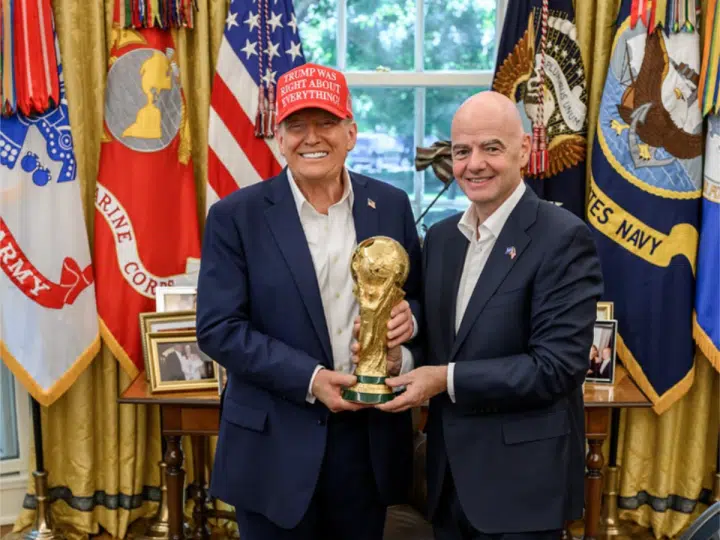
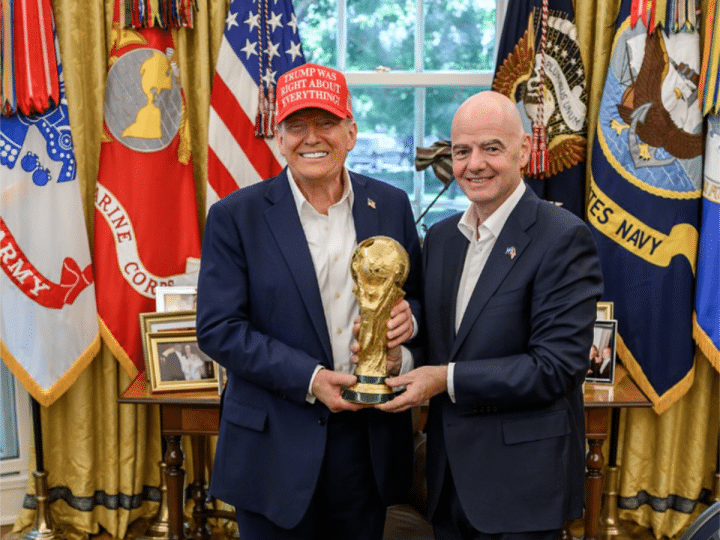
When FIFA president Gianni Infantino revealed that he had received a call from US president Donald Trump, he may not have realised that he was not simply discussing a passing controversy.
Instead, he was describing a moment that would become tied to a much bigger question about football’s independence.
From that point, the debate was no longer about whether Balogun’s suspension was warranted. The question became whether FIFA’s rules could withstand political interference.
FIFA may argue that the sanction was not overturned. They may also claim that its implementation was suspended under a provision in its regulations. From a procedural standpoint, it might be a valid argument.
But justice is not judged by regulations alone. It is also judged by whether people believe those rules are applied fairly. Once supporters feel influence can open doors closed to others, even the strongest legal defence loses its weight.
Had this case followed a traditional legal route — through a public appeal and clear procedures — it would have remained a dispute over the interpretation of football’s regulations.
Instead, it became tied to a phone call between a head of state and FIFA’s president, followed by a decision that made people question whether the rules really apply equally to all.
What football stands to lose
The impact goes far beyond one player missing a match or one disciplinary decision being changed. The bigger issue is whether supporters still believe that football’s rules apply equally.
Perhaps FIFA’s decision was lawful. Perhaps it did not contradict the letter of its regulations. But in sport, there is something more important than winning a legal argument — maintaining trust.
Trust is not built on rules and regulations alone. It depends on the belief that those rules are applied independently, with a clear separation between politics and sporting decisions.
FIFA will be able to defend its decision, just as every side in this debate will be able to find an interpretation that supports its position. However, the harder task will be convincing supporters that any similar case in the future would be handled in exactly the same way. This must be done regardless of the people involved or the influence behind them.
That is why the Balogun case is unlikely to be remembered simply as a red-card controversy. It may instead be remembered as the moment when many began asking a much bigger question: are the laws of the game still written in football’s rulebooks, or do they now wait for the ring of a telephone?
Featured image via the Canary
By Alaa Shamali