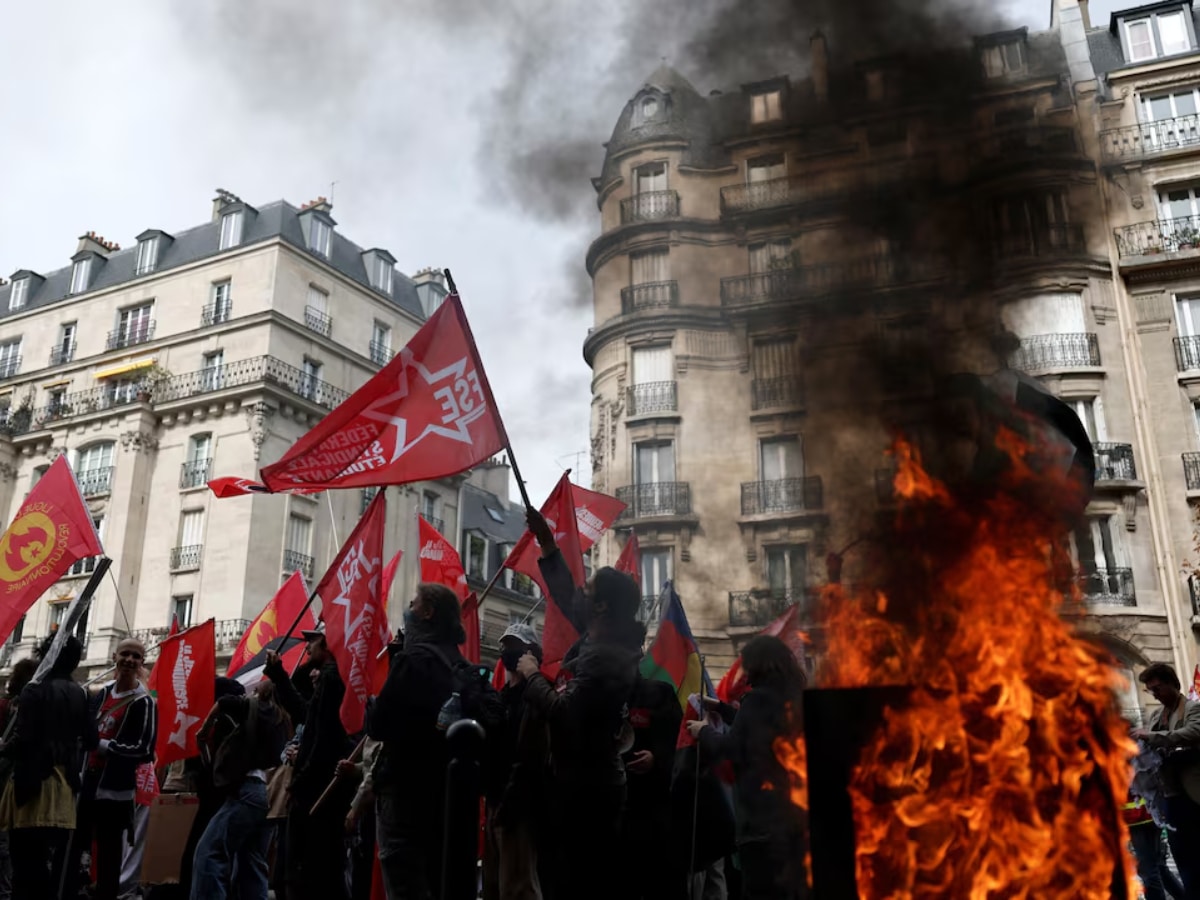
Trade unions in France held a nationwide day of strikes yesterday, Thursday 2 October, in protest against austerity measures. They’re pressing newcomer PM Sébastien Lecornu to consider a wealth tax on the super-rich, rather than cutting the budget for citizens already struggling with years of economic turmoil.
The Confédération Générale du Travail (CGT) counted the participants of yesterday’s strike at 600,000, across 230 towns and cities. However, the French police force put the number at just 195,000. If the latter is true, this was less than three times the number of the 70,000 officers mobilised in the heavy-handed police response.
Lecornu: strikes in France from the off
On 10 September, Sébastien Lecornu became France’s new prime minister. He’s the country’s fifth PM of the last two years. President Emmanuel Macron appointed him to the position, after he had previously held the office of defence minister.
The previous government, headed by PM François Bayrou, was brought down by a no-confidence vote on 8 September. Bayrou had proposed nearly EUR38bn in tax hikes and spending cuts, uniting parliament’s left and right in opposition against him. Likewise, Lecornu was immediately greeted by a wave of ‘Block Everything’ protests against his anticipated austerity measures when he first came to power.
These demonstrations were later followed by a nationwide strike on 18 September. As many as one million workers walked out in the name of social justice and in protest against further tax hikes. Transport operatives, hospital and pharmacy workers, and teachers joined the industrial action, causing major disruption across the country.