Responding to the arbitrary and secret executions of four dissidents in Iran since yesterday as at least seven other protesters and dissidents face the imminent risk of execution, Amnesty International’s Deputy Regional Director for the Middle East and North Africa Diana Eltahawy said:
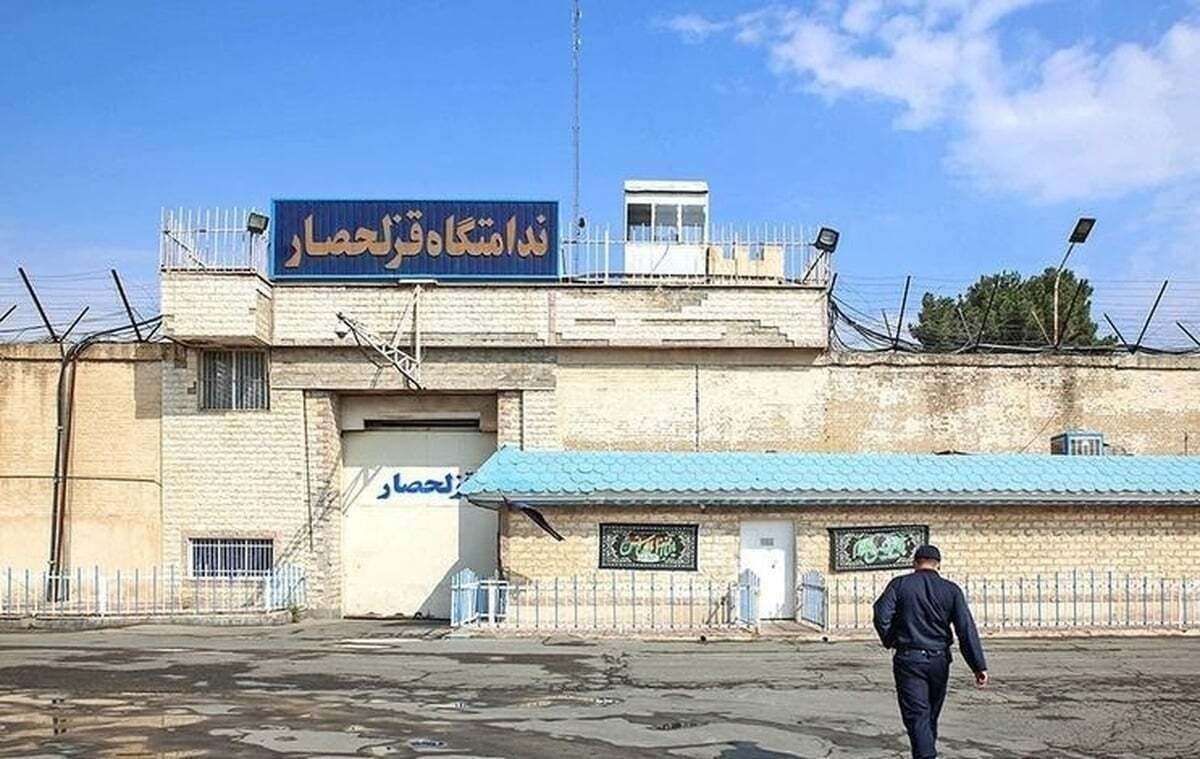
“Iranian authorities must immediately halt any plans to execute dissidents Vahid Bani Amerian and Abolhassan Montazer and protesters Mohammad Amin Biglari, Ali Fahim, Abolfazl Salehi Siavashani, Amirhossein Hatami, and Shahin Vahedparast Kolo, held in Ghezel Hesar prison, Alborz province.
“It is unconscionable that even as the population is reeling from conflict and mass bereavement amid the ongoing aerial bombardment by Israel and the USA, the authorities of the Islamic Republic of Iran continue to weaponize the death penalty to eradicate dissenting voices and further terrify people.
“Earlier this morning, the authorities executed in secret Babak Alipour and Pouya Ghobadi. This followed yesterday’s execution in secret of Akbar (Shahrokh) Daneshvarkar and Mohammad Taghavi Sangdehi. According to information available to Amnesty International, authorities carried out the arbitrary executions of the four without providing them or their families and lawyers advance notice or allowing them to say their final goodbyes. An informed source said the authorities have not returned the bodies of at least three – Babak
Alipour and Pouya Ghobadi and Akbar (Shahrokh) Daneshvarkar – to their families, deepening families’ anguish and suffering.
“Fears have now intensified over the fate of Vahid Bani Amerian and Abolhassan Montazer, convicted in the same case following a grossly unfair torture-tainted trial. The authorities have refused to provide any information regarding their fate and whereabouts to their families or lawyers since their transfer to an unidentified location on 30 March.
“In another distressing development, authorities transferred five young protesters – Mohammad Amin Biglari, Ali Fahim, Abolfazl Salehi Siavashani, Amirhossein Hatami, Shahin Vahedparast Kolo – from Ghezel Hesar to an unidentified location this morning, also sparking fears of their imminent execution. They were sentenced to death in a separate case related to alleged offences committed in the context of the January 2026 protests.
“All 11 men have said they were subjected to torture and other ill-treatment in detention, including beatings, floggings, prolonged solitary confinement, and death threats at gunpoint before being convicted in grossly unfair trials that relied on forced ‘confessions’ extracted under torture and lasted only a few hours.
“The death penalty violates the right to life and is the ultimate cruel, inhuman and degrading punishment. Carrying out death sentences imposed after serious fair trial violations render the execution arbitrary. All states must urgently call on Iranian authorities to immediately halt all executions and establish a moratorium on all executions with a view to abolishing the death penalty.”
Background:
Vahid Bani Amerian, Abolhassan Montazer, Babak Alipour, Pouya Ghobadi, Akbar (Shahrokh) Daneshvarkar and Mohammad Taghavi Sangdehi – were sentenced to death following grossly unfair proceedings before a Revolutionary Court in Tehran in October 2024,
which convicted them of “armed rebellion against the state” (baghi) on allegations of affiliation with banned opposition group, the People’s Mojahedin Organization of Iran (PMOI). They repeatedly denied all accusations of taking up arms against the state.
According to information obtained from informed sources, in the evening of 29 March 2026, Akbar (Shahrokh) Daneshvarkar and Mohammad Taghavi Sangdehi were suddenly transferred from Section 4 of Ghezel Hesar prison to an unidentified location. The next morning, 30 March, authorities announced their executions. They then took four other men, Babak Alipour, Pouya Ghobadi, Vahid Bani Amerian and Abolhassan Montazer, along with 14 other dissidents, also held in Section 4, to an unidentified location.
In the morning of 30 March, the authorities cut off all phone lines for political dissidents imprisoned Section 4 of Ghezel Hesar prison, who have since been held incommunicado.
On 31 March, the authorities announced the executions of Babak Alipour and Pouya Ghobadi.
The executions of 30 and 31 March follow the executions of four other men; Saleh Mohammadi, Mehdi Ghasemi and Saeed Davoudi- on 19 March 2026, who had been arrested in connection with the January 2026 protests, and the reported execution of Kouroush Keyvani on espionage-related charges on 18 March 2026.
Saleh Mohammadi was sentenced to death by Criminal Court One in Qom on 4 February, less than three weeks after his arrest on 15 January 2026 in connection with the death of a security agent during protests in Qom on 8 January 2026, an accusation he denies. The verdict, reviewed by Amnesty International, shows that he retracted his “confessions” in court saying they were extracted under torture, but the court dismissed this without any investigation. An informed source said he sustained hand fractures as a result of beatings.
Seven men, namely Mohammad Amin Biglari, Ali Fahim, Abolfazl Salehi Siavashani, Amirhossein Hatami, Shahin Vahedparast Kolor, Shahab Zohdi and Yaser Rajaifar were sentenced to death for “enmity against God” (moharebeh) by Branch 15 of the Revolutionary Court of Tehran for allegedly setting a Basij base on fire in Tehran. Their sentences were issued on 9 February 2026, less than a month after their arrests in January 2026.
An informed source said Mohammad Amin Biglari was forcibly disappeared for several weeks before being moved to Ghezel Hesar prison. Authorities denied him access to a lawyer during investigations and then assigned him a state-appointed lawyer, who failed to represent his interests during a fast-tracked trial in which the court relied on forced “confessions” to convict him. They subsequently denied an independent lawyer, appointed by his family, access to his casefile, hindering his ability to file an appeal before the Supreme Court.
Since the 2022 Woman Life Freedom uprising, Iranian authorities have embarked on an execution spree putting to death thousands following grossly unfair trials, with the pace of accelerating following the 12-day war in 2025 and reaching a scale not seen in over four decades.