Several countries across the Americas are adopting restrictive legal frameworks to weaken, control, and even dismantle civil society organizations, Amnesty International said today as it launched its new report Tearing Up the Social Fabric: Impact of restrictive laws on civil society organizations in the Americas.
Between 2024 and 2025, Ecuador, El Salvador, Nicaragua, Paraguay, Peru and Venezuela adopted or reformed legal frameworks that impose disproportionate controls on civil society organizations (CSOs), directly affecting their ability to support communities, defend human rights, operate, and access resources.
“What we are seeing is a worrying regional pattern. So-called ‘anti-NGO laws’ reflect the rise of authoritarian practices aimed at silencing critical voices and consolidating power at any cost,” said Ana Piquer, Americas Director at Amnesty International.
What we are seeing is a worrying regional pattern. So-called ‘anti-NGO laws’ reflect the rise of authoritarian practices aimed at silencing critical voices and consolidating power at any cost.”
Ana Piquer, Americas Director at Amnesty International.
A regional pattern to silence critical voices
Amnesty International’s comparative analysis identified common elements across the laws adopted in the region.
In all countries analysed, the approval of these laws was preceded by campaigns of stigmatization against civil society organizations and human rights defenders. Authorities, legislators and allied voices labelled these organizations as “internal enemies”, “foreign agents” or “anti-patriotic”, fuelling public distrust and creating a climate of intimidation. In some cases—such as in Paraguay—this included racist and misogynistic rhetoric, fostering an environment of fear and self-censorship.
These laws were also adopted without adequate public consultation or dialogue. Although justified in the name of transparency or the prevention of financial crimes, in most cases sufficient regulatory mechanisms already existed to achieve these goals. The speed of their approval, the lack of evidence supporting alleged risks, and the absence of impact assessments reveal that their real purpose is to expand state control over civil society.
Vague provisions, arbitrary controls and disproportionate sanctions
The laws analysed include broad and ambiguous definitions such as “public order”, “political activity”, “social interest” or “distortion of objectives”, allowing discretionary interpretation and enabling selective enforcement against critical organizations and individuals.
They also establish administrative registration systems that condition the operation of organizations on state approval, without clear deadlines and under opaque criteria. These mechanisms amount to prior authorization, which is prohibited under international human rights standards.
In addition, organizations are required to comply with repetitive and excessive obligations, including detailed financial and operational reports, inventories, and prior notifications on the use of funds. These requirements not only duplicate existing regulations, but also divert human and financial resources away from their core work.
In Venezuela, for example, administrative discretion and impossible requirements have hindered the work of human rights organizations by imposing registration processes under opaque criteria, demanding sensitive information, and threatening sanctions.
Control over funding is another central element. Restrictions on access to international cooperation, abusive taxation—such as in El Salvador—and prior authorization requirements to receive funds have undermined the sustainability of essential projects, particularly those related to human rights, gender, the environment and Indigenous peoples.
In some contexts, banks and donors have conditioned their relationships on compliance with these laws, leading to the reduction or cancellation of programmes that support vulnerable populations.
Risks to safety and criminalization
These laws also require the disclosure of detailed information about donors, beneficiaries and staff, without effective data protection safeguards. In hostile environments, this exposes human rights defenders, LGBTIQ+ people, survivors of violence and Indigenous communities to increased risks of surveillance and persecution.
Moreover, several legal frameworks establish disproportionate sanctions with wide discretionary powers, including excessive fines, freezing of bank accounts, confiscation of assets, suspension or cancellation of legal status, and even criminal penalties.
In Peru, a civil society organization could be dissolved solely for legally representing victims of human rights violations in litigation against the state.
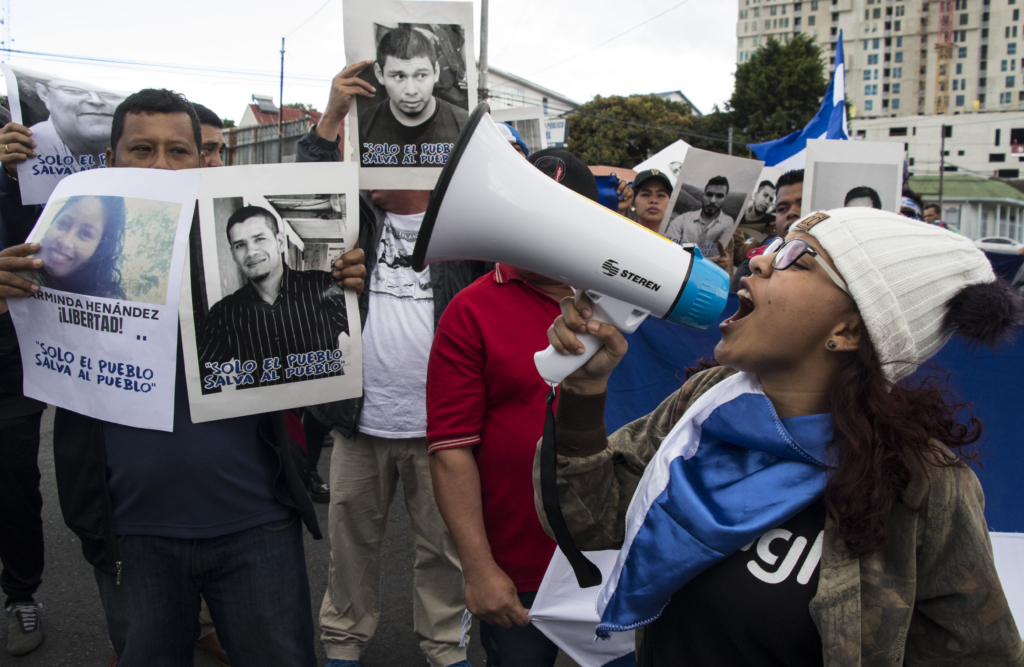
In Nicaragua, these measures have led to the mass closure of thousands of organizations. In other countries, such as Ecuador, cases of suspension, intervention or bank account blockages have been documented as forms of pressure.
An impact beyond organizations
Civil society organizations play a fundamental role in the social fabric and in the day-to-day protection of human rights. In many cases, they document state abuses, provide legal support to victims, defend Indigenous territories against extractive projects, support survivors of gender-based violence, promote transparency, and monitor electoral and judicial processes.
When these organizations are silenced or dismantled, communities lose essential allies in their efforts to seek justice, access information and defend their rights.
Human rights defenders interviewed by Amnesty International described a severe deterioration in their ability to act, influence public policies and support communities.
Many reported emotional exhaustion, reduced activities, forced migration or self-censorship. In some cases, prolonged harassment has led to exile.
“Freedom of association is a gateway to the exercise of other rights. When civil society organizations are dismantled, entire communities lose support, representation and avenues to seek justice. Without a strong and independent civil society, people cannot enjoy or defend their human rights,” said Rosalía Vega, Director of Amnesty International Paraguay.
When civil society organizations are dismantled, entire communities lose support, representation and avenues to seek justice. Without a strong and independent civil society, people cannot enjoy or defend their human rights.”
Rosalía Vega, Director of Amnesty International Paraguay.
An urgent call to reverse the shrinking civic space
Amnesty International concludes that the laws analysed fail to comply with international obligations on freedom of association, freedom of expression, privacy and the right to defend human rights.
Rather than strengthening transparency, these frameworks contribute to the shrinking of civic space and reinforce authoritarian practices.
The organization calls on governments in the region to:
- Repeal or amend laws that violate freedom of association.
- End stigmatizing rhetoric against civil society organizations and human rights defenders.
- Ensure that any regulation of CSOs complies with the principles of legality, necessity and proportionality.
- Facilitate access to national and international funding without undue restrictions.
- Refrain from criminalizing the legitimate work of human rights defenders.
Amnesty International also calls on the Financial Action Task Force (FATF) and the donor community to reject the misuse of financial standards as a pretext to restrict civil society.
“Protecting the right to organize is protecting the very heart of human rights,” concluded Ana Piquer.
“Protecting the right to organize is protecting the very heart of human rights.”
Ana Piquer, Americas Director at Amnesty International.
For more information or to arrange an interview, please contact [email protected]