Responding to Israel’s use of repeated, overly broad evacuation orders across Lebanon over the past four days, including to more than 100 villages and towns in the country’s south and east, as well as the entirety of Beirut’s southern suburbs, displacing hundreds of thousands of people, Kristine Beckerle, Deputy Regional Director for the Middle East and North Africa at Amnesty International said today:
“Civilians in Lebanon are once again being ordered to flee en masse by a military that has repeatedly shown its willingness to inflict significant civilian harm through unlawful attacks in previous rounds of fighting. The sweeping evacuation orders have sown panic and terror, displaced hundreds of thousands of people and fuelled yet another humanitarian catastrophe for a population already exhausted and reeling from multiple crises.
“The overly broad warnings covering vast areas of Lebanon do not constitute effective guarantees of protection. They provide no meaningful information about where or when the Israeli military might strike and offer civilians nowhere near the level of guidance needed to make informed decisions about whether, or for how long, to flee. Many civilians, including older people, children, people with disabilities, cannot evacuate, or may have nowhere safe to go.
The sweeping evacuation orders have sown panic and terror, displaced hundreds of thousands of people and fuelled yet another humanitarian catastrophe for a population already exhausted and reeling from multiple crises.
Kristine Beckerle, MENA Deputy Director
“Issuing mass evacuation orders does not grant the Israeli military the right to treat these areas as open-fire zones, nor does it absolve Israel of its obligations under international humanitarian law to protect civilians and to take all feasible precautions to minimize harm to civilians, wherever they are. In the 24 hours since the mass evacuation order for Beirut’s southern suburbs, for example, the Israeli military has carried out repeated air strikes, many without warnings.
“The repeated use of overly broad warnings, paired with the Israeli military’s extensive destruction of civilian property in more than two dozen municipalities along Lebanon’s border both before and after a ceasefire was in place, raises serious concerns that some of these mass evacuation orders are intended to forcibly displace civilians, which is prohibited by international humanitarian law.
“The absolute impunity that Israel has enjoyed after previous rounds of fighting has paved the way for these same violations of international law to recur, once again placing civilians at grave risk. We urge parties to the conflict to uphold their obligations under international humanitarian law, to protect civilians and to refrain from unlawful attacks.”
Background
Less than 100 hours after fighting escalated in Lebanon, according to the Norwegian Refugee Council, more than 300,000 people had been displaced across the country. As of 6 March, Lebanon’s Public Health Emergency Operations Centre, affiliated with the Ministry of Public Health, announced that 217 people had been killed and 798 injured since fighting escalated on 2 March, and that more than 110,000 of those displaced were in collective shelters.
Between 3-6 March the Israeli military issued a series of evacuation orders instructing residents of entire towns and villages in south Lebanon and areas of the Bekaa Valley to evacuate. These included one on 5 March in which Israel’s military ordered the entire population living south of the Litani River to leave “immediately” for their “safety”.
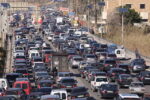
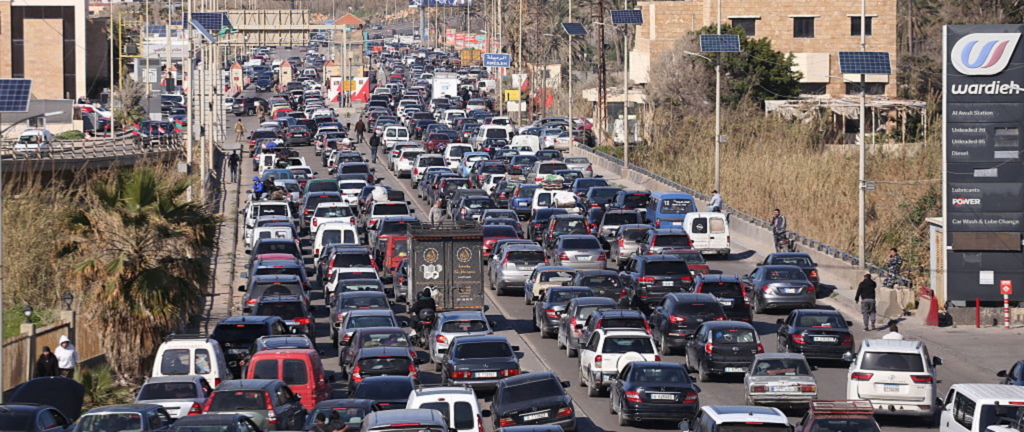
On 5 March, the Israeli military issued another blanket evacuation order, this time to all the residents of Dahieh, the densely populated southern suburbs of Beirut. As residents scrambled to flee, roads were clogged for hours, with fear-gripped residents escaping in cars or on foot carrying whatever they could.
Hezbollah and Israel engaged in cross-border hostilities after the group launched attacks into northern Israel following the outbreak of hostilities between Israel and Hamas in the occupied Gaza Strip in October 2023. Despite a ceasefire being agreed in 2024, Israel continued carrying out near-daily strikes, primarily in southern Lebanon and the Bekaa region, killing at least 127 civilians while the ceasefire was in place.
On 2 March 2026, Hezbollah launched a series of attacks into Israel in response to the killing of Iranian Supreme Leader Ali Khamenei following a US-Israeli attack on Iran. Since October 2023, Amnesty International has documented Israel’s unlawful attacks on civilians and civilian objects, use of white phosphorous and its extensive destruction in Lebanon’s border villages, as well as Hezbollah’s repeated firing of unguided rockets into civilian areas in Israel. All must be investigated as war crimes.