Governments and anti-rights movements around the world are putting decades of progress on gender equality, including access to abortion, at risk. But at the same time, thousands of people are fighting back, determined to protect the rights that so many have fought for over decades.
Ahead of International Women’s Day, we spoke with five courageous human rights defenders from Tunisia, Mexico, Burkina Faso, Poland, and the United States, who shared their strategies for protecting access to abortion, their hopes for the future, and the reasons why they believe that, despite numerous and growing challenges, humanity must always prevail. Here’s one of those stories.
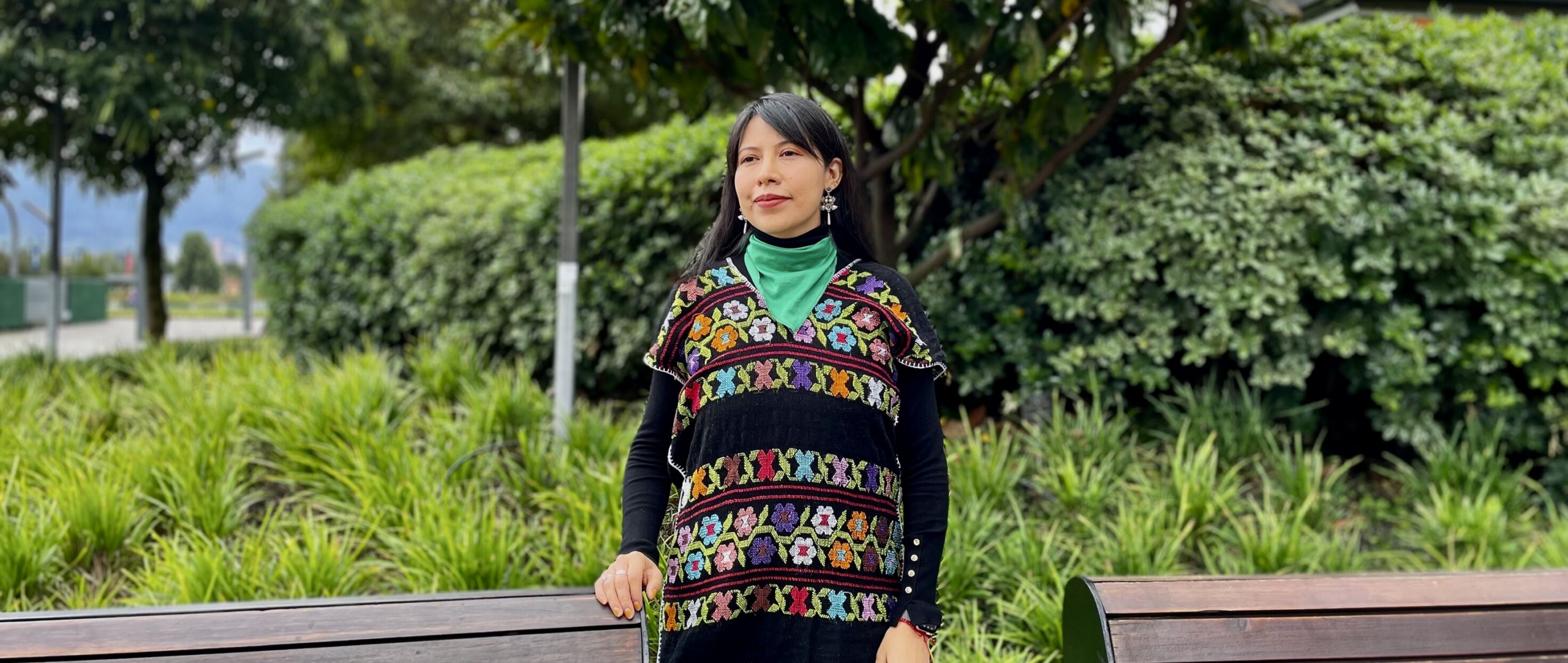
My name is Guillermina Edith Juárez Leyva and I am a Zapotec woman from Oaxaca, Mexico. I am the founder and legal representative of Mano Vuelta AC, an organization of indigenous and Afro-Mexican women who work for human rights from an anti-racist and intercultural perspective.
The name of our organization, Mano Vuelta, is inspired by an ancestral form of community organization that promotes work and sharing for the common good. If I plant corn and need help, I can ask for it and then in return I help others with my work. These practices have sustained the lives of our communities since ancient times. This is also how we see the work of providing access to abortion.
‘Our indigenous grandmothers already practiced abortions’
We are interested in developing strategies based on community education as a way to open conversations with community groups without imposing our ideas. We want to know what they think about sexuality and what they have heard about abortion.
Recovering ancestral wisdom is essential for us. As indigenous women, we have knowledge in our memories; our grandmothers performed abortions. By recovering this wisdom, we confront narratives that promote guilt or criminalization. We promote life by accompanying and supporting other women. We are also documenting and analysing the barriers we face in accessing our rights through field research and by monitoring how budgets are spent.
‘It is important to commit to collective care’
From a legal standpoint, the movement for access to abortion in Mexico has made steady progress and taken important steps that will not be reversed. Oaxaca was the second state in Mexico to decriminalize abortion in 2019.
However, we must continue to insist that all other states in the country harmonize their criminal codes to completely decriminalize abortion.
Over the years, we have documented how laws are not enough. Adequate budgets are needed to make abortion fully accessible to all. In Oaxaca, a very large and diverse state with 570 municipalities, there are only 14 health units that provide safe abortion services. This leaves out communities that are not close to the capital. Access to abortion services is complex.
Another challenge is cultural relevance. The absence of information on abortion access in indigenous languages and the lack of interpreters in a multilingual state such as Oaxaca is a huge problem. Added to these barriers is a lack of staff and supplies.
In addition, misinformation and opposition from health professionals who declare themselves conscientious objectors persist.
We need sensitive and trained staff with an intercultural and anti-racist approach to provide dignified service. We strongly insist on autonomy, on the possibility for girls and women to make decisions about their bodies, about whether or not they want to have a family, when and how many children.
The work is arduous. As small, grassroots organizations, we have many responsibilities and are overburdened. This is compounded by the financial challenges of continuing to develop our work, which leaves many of our staff exhausted and with psychosocial impacts. It is therefore very important to also reflect on the importance of placing the collective care of human rights defenders at the centre.
Furthermore, in Mexico, being a human rights defender is very dangerous. We work in a context of high criminalization, militarization, organized crime and a historic struggle against megaprojects and extractivism.
‘There is no turning back’
All struggles are interconnected. For example, the defence of territory and reproductive justice. Without access to water, it is not possible to have a dignified menstruation or exercise the right to health. This has a differential impact on indigenous and Afro-descendant women. Our work is focused on developing networks; we believe in the collective as a way of resisting and solving problems beyond government responses.
We create training processes with authorities, health personnel and, above all, with the teaching community on issues such as Comprehensive Sexuality Education. This prevents sexual violence, harassment and discrimination. We empower other women to take ownership of tools to ensure accountability and see how and if their taxes are being used to guarantee access to healthcare, and we are producing materials in indigenous languages.
We connect by sharing our stories, experiences, identities, and oppressions such as racism and classism. The network of Indigenous and Afro-Mexican companions provides support, information, and access to autonomous abortion. We have a small supply bank to bring medicines such as mifepristone and misoprostol to our communities.
Our support is warmer, sometimes offered in a person’s own indigenous language, and has an intersectional, intercultural, and anti-racist approach. It is a targeted service that offers guidance in a person’s own community or nearby, filling the void left by the government.
Collective approach
The struggles are collective, and we advance as we weave networks and alliances based on reciprocity and horizontality. With partner organizations such as Amnesty International, Fos Feminista, and Astraea, we have come together to generate collective actions in favour of abortion, comprehensive sexuality education and the rights of sex and gender diversity.
Organizations such as Amnesty International build bridges and amplify messages and impact in various territories through their digital platforms and networks, but they also have extensive experience in organizing, promoting and creating movements to promote access to abortion.
We have collectively developed actions such as the Latido Común (Common Heartbeat) or Conversa EIS (EIS Conversation) campaigns, where Mano Vuelta and Amnesty International have led the process, with regional reach and a political commitment to advancing human rights.
My greatest motivation is girls. Seeing the young women and girls in the networks we support, who come with empathy, with more strength and the power to verbalise injustices, gives me a lot of hope.
To my colleagues who are resisting in very restrictive contexts, I say: even though we sometimes want to throw in the towel, we must regain our joy and recognise these ancestral practices of care and organization. We are strong. We know that there are many of us beating to the same heartbeat, that we are continuing to move forward and that there is no turning back.
Let’s continue dreaming and working for a better world for those who will come after us.