The Nigerian Government must immediately expedite their investigation into gas leaks across the Bille community in the oil-producing Niger Delta region, which are putting the lives of local residents in grave danger, warned Amnesty International.
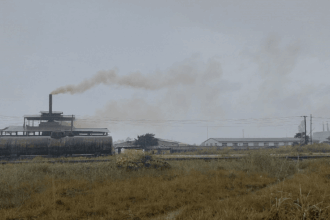
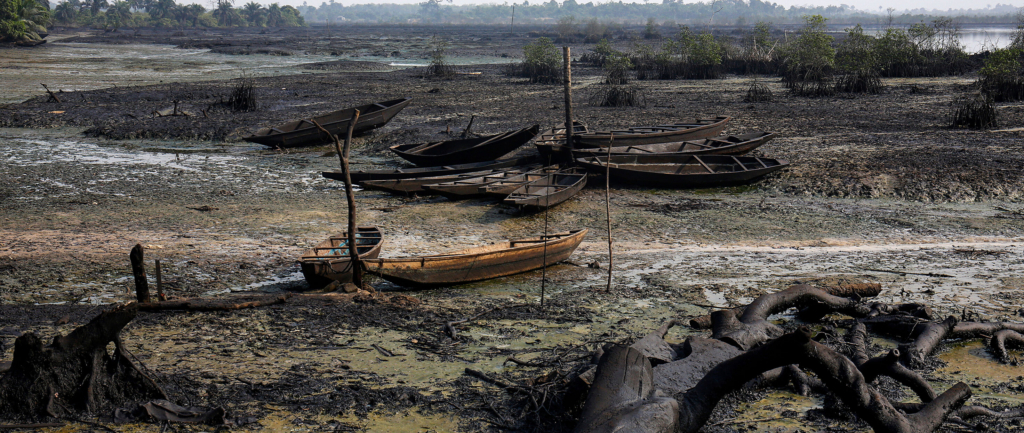
In October 2025, fishermen from Bille, a coastal town in Rivers State, reported seeing bubbling water accompanied by a sulphurous smell in a mangrove swamp and river several kilometres away from the town. Within a week, scores of residents reported the same phenomenon at other sites including inside the town itself, while some said they were able to set fire to the air near where the gas was bubbling. The Bille community is located close to various sites of extensive oil and gas infrastructure, including oil wells and pipelines.
“The alarming number of reports of gas leaks across the Bille community is harrowing and the affected area appears to be expanding. The leaks are already contaminating the town’s drinking water, while a number of children at a local school have been forced to relocate after they fell ill and started vomiting,” said Isa Sanusi, Amnesty International Nigeria’s Country Director.
“The Nigerian government has a duty to protect Bille residents from human rights abuses, including any which may be caused by private actors, such as oil companies. Oil company infrastructure has previously been found to be impinging on a range of rights including the right to health and to a safe, clean, healthy and sustainable environment. The government needs to immediately identify the source of the leak and stop it – or take other measures to secure the community from a potentially catastrophic incident.”
Nigeria must take action and prevent further harm
The site of the bubbling methane is located close to extensive oil and gas infrastructure, including pipelines and wells, constructed and operated by the oil major Shell, but then sold to various Nigerian companies. An investigation of the gas leak has not been completed, so the source is not known. This is precisely why Nigeria must take urgent action to investigate and prevent further harm.
Residents are now desperate for Nigerian state agencies to take action, having reported the leaks widely. In December 2025, the National Oil Spill Detection and Response Agency (NOSDRA) sent a representative to conduct air quality tests at several sites, which found that methane levels at one site were 10,000 times higher than normal background methane levels.
Everyone in Bille is affected by the methane leak and something needs to be done urgently to save the lives of the residents.
Chairman of the Bille Council of Chiefs, Bennett Okpoki
“Everyone in Bille is affected by the methane leak and something needs to be done urgently to save the lives of the residents,” said Chairman of the Bille Council of Chiefs, Bennett Okpoki.
“The tests have revealed that there is a high level of methane and until now the Nigerian government has not done anything to remedy this situation. This is an indication that the life of Bille residents is not important to the government. We want the international community to step in and at least tell the government to do something about it.”
Oil companies must cooperate with the government
Going forward, Amnesty International is calling for oil companies to co-operate with the Nigerian government to prevent any further harm to this community.
“While it remains unknown whether oil and gas infrastructure has caused the methane leak, all oil and gas companies in the region must determine whether their current or former infrastructure could be contributing to the issue and fully cooperate with any forthcoming investigation by Nigerian authorities,” said Isa Sanusi.
“The choice to divest from or abandon certain infrastructure does not absolve any company from the responsibility to clean up and remedy any harm it may have caused. Urgent action needs to be taken now.”
Notes to editors
Amnesty International contacted Shell prior to publication and provided the company with an opportunity to respond. Shell replied that it “no longer owns or operates onshore oil and gas infrastructure in the Niger Delta” following the sale of its Nigerian subsidiary in 2024.
Amnesty International Nigeria contacted NOSDRA to request a report of the findings from this visit, but the regulatory agency declined to provide any materials until “investigations are completed”.
Amnesty International also contacted Nigeria’s Ministers of State for Petroleum Resources for comment on the government’s plans to protect the Bille community, but has not received a response as of the date of publication.
Background
Amnesty International has been supporting the residents of Bille and another community, Ogale, for more than ten years after their livelihoods had been destroyed and homes damaged by hundreds of oil spills caused by Shell. The pollution caused widespread devastation to the local environment, killing fish and plant life, and left thousands of people without access to clean drinking water.
The communities brought their claims in the UK courts where Shell repeatedly delayed the case arguing it had no legal responsibility for any of the pollution. In 2021 the UK Supreme Court then ruled that Shell can be held liable for the oil spills and leaks it has failed to clean up in the Niger Delta. A trial in the case is due to be held in 2027.