Saturday 28 March marks seven years since Amara Krumak, Abdalla Bari and Kone Tiemoko Abdul Kader – known as the El Hiblu 3 – were arrested in Malta for opposing their forced return to Libya, where they would be at risk of persecution, torture and other serious human rights violations. For this act of resistance, they were charged with “acts of terrorism” and other offences by the Maltese authorities.
“It is unconscionable that the El Hiblu 3, who survived abuse in Libya, a shipwreck, and an attempted unlawful return, are now facing the prospect of life imprisonment simply for asserting their rights and trying to prevent further harm,” said Dinushika Dissanayake, Amnesty International’s Deputy Regional Director for Europe.
In March 2019, the three teenagers, (aged 15, 16, 19) fled Libya on a crowded rubber boat alongside 108 others. When the boat began to deflate, they were rescued by the El Hiblu cargo ship, which had been requested by the European Union’s (EU) naval operation in the Mediterranean to assist the vessel in distress.
Following the rescue, the ship’s captain attempted to return those on board to Libya, an act that would have violated international law, which requires rescued persons to be taken to a place of safety. When those onboard realized they were being returned, panic ensued. After they pleaded with the El Hiblu’s captain, with some people saying they’d rather die than return to Libya, the ship turned around and set off for Malta instead.
When the ship arrived in Malta, the Maltese authorities claimed the three youths had taken over the ship by force. They were charged with serious crimes punishable by life in prison under Maltese terrorism legislation, and to this day are still caught in court proceedings that should never have been brought.
No one should be punished for seeking protection.
Dinushika Dissanayake, Deputy Regional Director for Europe.
“Libya is not a safe country. By resisting their return, they helped prevent a serious breach of international law which would most likely have resulted in horrible suffering for themselves and many others. No one should be punished for seeking protection. Amnesty International stands in solidarity with Amara, Abdalla and Kone as they endure a seventh year of an unjust legal ordeal.”
A catalogue of failures
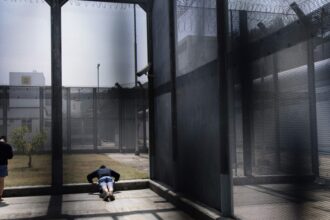
Over the past seven years Malta has consistently failed these three young men, two of whom were children at the time of their arrest. The Maltese authorities failed to assess their best interests as children, detained them in a high-security adult prison and subjected them to adult court proceedings.
Amnesty International is also concerned by procedural issues and gaps in the investigation that have further affected the fairness of proceedings, for example, key witnesses never being summoned, including other people who were rescued. Despite the absence of evidence of violence, the authorities have persisted with terrorism-related charges that are unfounded.
“Malta has instituted a catalogue of failures in its handling of this case. These young men have been denied a fair trial and were treated as adults, spending seven years of their youth in legal limbo – time that should have been spent in education, work, and simply growing up free from the shadow of prosecution,” said Dinushika Dissanayake.
Kone is currently in migration detention in the UK and faces extradition to Malta. Amnesty International opposes his extradition as it would return him to a prosecution that should never have been brought.
Growing recognition of injustice
Amnesty International welcomes the recent remarks of four UN independent experts, who in January firmly criticized Malta’s handling of the case and called for the charges to be dropped. They specifically raised concerns about laying charges of “terrorism” which “do not appear to be based on violent or coercive criminal conduct” and the violation of fair trial rights, as well as failures to uphold the rights of the child.
The UN experts also recalled that the EU’s naval operation in the Mediterranean had instructed the El Hiblu on behalf of the Libyan Coast Guard to return the people rescued to Libya, thus directing an unlawful pushback. This is a reminder of the EU’s persistent cooperation with Libya where systematic and widespread violations against refugees and migrants are ongoing with impunity.
Reports of the EU seeking to extend its cooperation on migration and border control with the Libyan Arab Armed Forced (LAAF’s) armed group, the de facto authorities in eastern Libya and southern Libya, are deeply alarming, given the LAAF’s record of involvement in war crimes and other violations of international law.
“As Amnesty International has said from the outset, this case exemplifies all that is fundamentally wrong with European migration policies in the Central Mediterranean. There is a growing recognition that these charges are unjustified and deeply unfair.
“Criminalizing people for seeking protection only prolongs their suffering and compounds their trauma. After seven years, these young men have endured enough. Malta must drop the charges and dismiss this case,” said Dinushika Dissanayake.
Background
On 22 January 2025 the Court of Appeal in Valletta found that Malta has jurisdiction over the case, which must therefore continue to be heard by Malta’s criminal court. The preliminary hearings are ongoing.
For more information see here.