BANGKOK, Thailand (26 March 2026) – We, the undersigned human rights organizations and networks, urge members of the Global Alliance of National Human Rights Institutions (GANHRI) to continue to push for meaningful reforms at the National Human Rights Commission of India (NHRCI) ahead of GANHRI’s Annual Meeting in Geneva from 30 March to 1 April 2026.
In March 2025, GANHRI’s Sub-Committee on Accreditation (SCA) recommended a downgrade to NHRCI’s status from “A” to “B,” citing concerns over its ability to function independently. GANHRI gave the NHRCI a year to act upon the recommendations before it made a final decision. The NHRCI challenged the downgrade recommendation, but the appeal was rejected by the GANHRI Bureau, referring the matter back to the SCA. Under the original timeline, SCA was supposed to make a final decision in April 2026, however, it has now been postponed to November 2026.
NHRCI should use this time to undertake meaningful reforms to ensure compliance with the Paris Principles, the international minimum standards for effective, independent and transparent national human rights institutions.
The SCA first formally raised its concerns in 2011 and reiterated them in 2016, 2017, 2023, and 2024, then deferred NHRCI’s re-accreditation for two consecutive years, in 2023 and 2024.
GANHRI members should ensure continued scrutiny over the NHRCI’s persistent failures in addressing SCA’s longstanding recommendations as outlined below:
- Conflict of interest in investigations
Concerns over the NHRCI’s reliance on police officers seconded from the government to conduct investigations remain unaddressed, particularly in cases involving alleged police abuses. This practice creates conflicts of interest, undermining impartiality and victims’ trust in the Commission. Despite consistent recommendations since 2017, the NHRCI has failed to diversify its investigative staff to include independent experts such as human rights investigators, forensic specialists, and legal professionals.
- Lack of pluralism in leadership and staff
The NHRCI continues to fall short of the Paris Principles’ requirements on pluralism. Its composition lacks representation, with limited gender diversity and inadequate inclusion of minority perspectives. Key positions have remained vacant for extended periods, including seats reserved for civil society representation.
- Opaque leadership appointments
The process for appointing the NHRCI’s Chairperson, members, and senior staff lacks transparency and meaningful public participation. The continued appointment of senior officials with close ties to the government, including the Secretary General, raises serious concerns over independence. Despite repeated SCA recommendations, vacancies are neither publicly advertised nor subject to open and merit-based selection processes, reinforcing a lack of independence and pluralism.
- Inadequate response to shrinking civic space and reprisals against human rights defenders
The NHRCI has failed to effectively respond to the ever-deteriorating human rights environment in India, including increasing restrictions on freedom of expression, the misuse of repressive laws such as the Unlawful Activities (Prevention) Act (UAPA), and reprisals against human rights defenders.
Despite receiving communications from United Nations Special Rapporteurs, the NHRCI has remained silent on emblematic cases, such as the illegal detention of refugees and asylum seekers from Myanmar. In other instances—including the case of Adivasi women human rights defender Suneetha Pottam—the NHRCI dismissed complaints on procedural grounds, such as pending judicial proceedings, rather than being pursued through independent inquiry.
More broadly, the Commission has failed to address patterns of repression, including the prolonged detention without trial—under the UAPA—of human rights defenders Umar Khalid, Sharjeel Imam, Ibrahim Dafadar, and Khurram Parvez. Similarly, despite rising attacks and harassment against journalists—including Rana Ayyub, Rajdeep Sardesai, Ravish Kumar, Mohammed Zubair, Arfa Khanum Sherwani, Mahesh Langa, and Prabir Purkayastha—the Commission has failed to respond to the broader pattern of intimidation and intervene beyond isolated cases.
In addition, the NHRCI has not exercised its visitation mandate to assess detention conditions and provide protection. These inactions reflect a systemic failure to address shrinking civic space and reprisals against dissenting voices.
- Limited and selective engagement with civil society
The NHRCI’s engagement with civil society organizations (CSOs) remains limited and selective, as it largely interacts with a narrow group of actors while excluding defenders and organizations critical of its performance.
Such exclusions of independent and diverse CSOs negatively impact the NHRCI’s ability to adequately and independently address human rights violations.
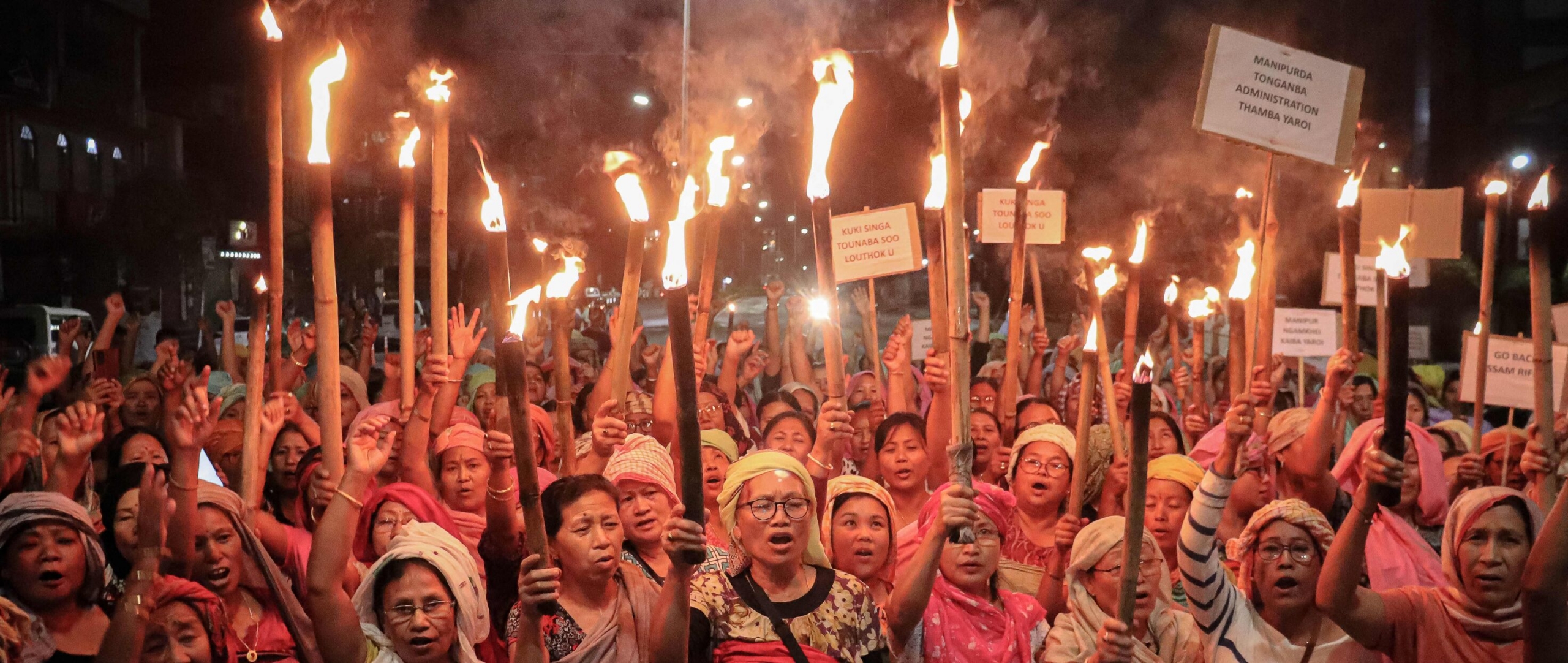
For example, during the crisis in Manipur, the NHRCI failed to engage with independent civil society actors despite the availability of credible fact-finding reports, including those produced by the People’s Union of Civil Liberties alongside jurists and human rights defenders. The Commission neither consulted these actors nor facilitated a broader public dialogue, undermining its mandate for cooperative and participatory engagement.
Similarly, the NHRCI has neither engaged with civil society groups that contributed to critical reports submitted to the SCA, nor has it initiated transparent consultations on implementing the SCA’s recommendations. Such useful engagements could have facilitated constructive dialogues that could have paved the way to concrete improvements of the NHRCI’s performance.
- Silence on systemic human rights violations
Despite longstanding recommendations, the NHRCI has not consistently or proactively addressed serious human rights violations. It has remained largely silent on systemic issues raised by international bodies, including concerns highlighted by the Committee on the Elimination of Racial Discrimination regarding forced evictions of indigenous communities, illegal detentions in Assam, and extrajudicial killings of Adivasi people in Bastar, Chhattisgarh. The NHRCI has not taken suo motu cognizance of these issues nor publicly articulated its position.
The Commission has failed to address widespread violations and systemic discrimination against minorities, including violent attacks, killings, and unlawful demolitions.
It has remained silent on the passage of new laws and regulations, such as the Digital Personal Data Protection Act, 2023, and Information Technology (Intermediary Guidelines and Digital Media Ethics Code) Rules, 2021, that could further enable state surveillance and undermine privacy and the right to freedom of expression.
CSOs have routinely raised concerns over the NHRCI’s inconsistencies and ineffectiveness in addressing serious human rights violations. As an example, most complaints have been routinely dismissed at the early stages of filing, often without detailed investigations. All these undermine the Commission’s mandate and compliance with the Paris Principles.
Concerns regarding NHRCI’s remarks on the Paris Principles
We are deeply concerned over the recent suggestions of the NHRCI Chairperson—a member of the GANHRI Bureau—to “overhaul” or “revamp” the Paris Principles, the global standard for ensuring the independence and efficiency of national human rights institutions.
Overhauling the Paris Principles risks weakening human rights protections and eroding trust in an international system designed to hold NHRIs accountable.
The NHRCI Chairperson questioned the relevance of the Paris Principles, suggesting that they focus primarily on the “cosmetic” aspects of institutional design—such as formal structures and the issuance of public statements—rather than ensuring substantive effectiveness.
Such remarks risk undermining the foundational role of the Paris Principles, which were specifically developed to guarantee the independence, credibility, and functional effectiveness of national human rights institutions. Framing these standards as merely procedural overlooks their critical function in safeguarding institutional integrity and enabling these institutions to operate in line with international human rights norms.
The NHRCI Chairperson’s further suggestion to replace GANHRI as the international body overseeing the accreditation process is self-serving and alarming. Such a move risks undermining the independence and credibility of the accreditation system and weakening accountability for compliance with international standards.
Call to action
We urge GANHRI Members, especially the Bureau and the SCA, to:
- Reaffirm the centrality and integrity of the Paris Principles;
- Reject any attempts to weaken or reinterpret these standards in ways that compromise independence;
- Continue to apply rigorous, consistent, and transparent accreditation processes.
We also call on the NHRCI to use the months ahead to strengthen its compliance with the Paris Principles. We urge the Commission to:
- Act on the SCA’s longstanding recommendations without further delay;
- Meaningfully consult with diverse and independent civil society actors beyond its existing CSO networks;
- Ensure that reform efforts are participatory and transparent, in consultation with parliamentarians, civil society, and human rights defenders across the country.
The credibility of GANHRI’s accreditation system depends on the consistent application of its standards and the willingness of its Members to uphold them without exception. Continued principled scrutiny is essential to safeguarding the integrity of NHRIs globally.
We thank GANHRI Members for their continued commitment to strengthening independent NHRIs. We are ready to support all efforts that advance accountability, transparency, and genuine reform.
Sincerely,
Amnesty International
The All India Network of NGOs and Individuals working with National and State Human Rights Institutions (AiNNi)
The Asian NGO Network on National Human Rights Institutions (ANNI)
Asian Forum for Human Rights and Development (FORUM-ASIA)
CIVICUS: World Alliance for Citizen Participation
Front Line Defenders (FLD)
Human Rights Watch
The International Coalition against Enforced Disappearances (ICAED)
International Federation for Human Rights (FIDH)
International Service for Human Rights (ISHR)
World Organisation against Torture (OMCT)