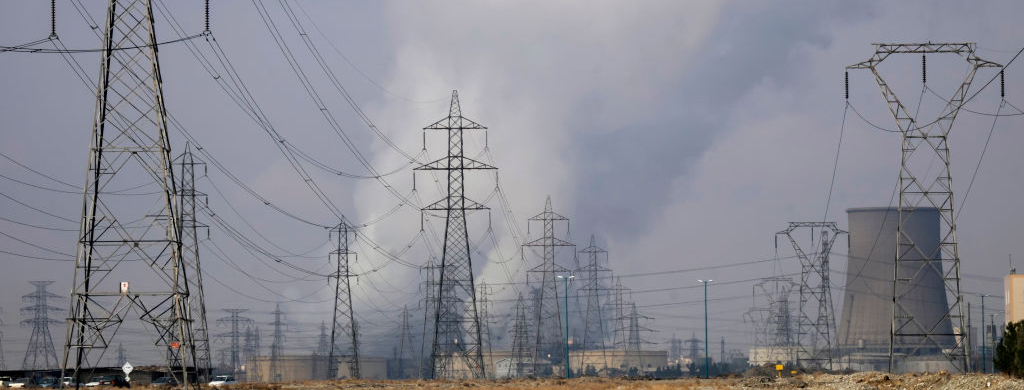
Responding to statements by United States President Donald Trump that the USA would postpone strikes on Iran’s power plants and energy infrastructure by five days pending the outcome of discussions on the “resolution of hostilities”, Erika Guevara-Rosas, Amnesty International’s Senior Director of Research, Advocacy, Policy and Campaigns, said
“President Donald Trump must retract deeply irresponsible threats of acts that would unleash catastrophic harm on millions of civilians. The decision to not proceed with such attacks must be based on the USA’s obligations under international humanitarian law to avoid civilian harm – not the outcome of political negotiations. Going through with such attacks would cause devastating long-term consequences and severely undermine the international legal framework designed to protect civilians in wartime.
“The Islamic Republic of Iran’s authorities must also retract their threats to retaliate by striking power plants used by the USA and Israel as well as economic, industrial, and other energy infrastructure in Gulf Cooperation Council (GCC) states. They must end all unlawful attacks against energy infrastructure and desalination facilities in the GCC states. Desalination plants are critical for ensuring drinking water supply to millions of civilians in an arid region. They must further end unlawful attacks on commercial vessels in Strait of Hormuz. Iranian authorities must also immediately restore full internet access.
President Trump must immediately retract these dangerous threats and commit the US to upholding international humanitarian law.
Erika Guevara-Rosas, Amnesty International
“Intentionally attacking civilian infrastructure such as power plants is generally prohibited. Even in the limited cases that they qualify as military targets, a party still cannot attack power plants if this may cause disproportionate harm to civilians. Given that such power plants are essential for meeting the basic needs and livelihoods of tens of millions of civilians, attacking them would be disproportionate and thus unlawful under international humanitarian law, and could amount to a war crime.
“By threatening such strikes, the USA is effectively indicating its willingness to plunge an entire country into darkness, and to potentially deprive its people of their human rights to life, water, food, healthcare and adequate standard of living, and to subject them to severe pain and suffering.
“When power plants collapse, horrific consequences cascade instantly. Water pumping stations would stop functioning, clean water would become scarce, and preventable diseases would spread. Hospitals would lose electricity and fuel, forcing surgeries to be cancelled and life-support machines to shut down. Food production and distribution networks would collapse, deepening hunger and causing widespread food scarcity. Many businesses would also shut down with devastating economic consequences including mass unemployment.
“Causing catastrophic harm to the civilian electrical capacity – at a time when the Iranian authorities’ deliberate prolonged internet shutdown has already left Iran’s population isolated – would sever people’s last remaining connection to the outside world, including access to satellite television, at a time of extreme danger.
“President Trump must immediately retract these dangerous threats and commit the US to upholding international humanitarian law.”
Background
On 21 March, US President Donald Trump issued a 48-hour ultimatum to the Islamic Republic of Iran to reopen the Strait of Hormuz, warning that the United States would “obliterate” Iranian power plants, “starting with the biggest one first,” if the Iranian authorities failed to comply. The Islamic Republic of Iran said it would retaliate by targeting the “power plants of the occupying regime [USA] and the power plants of regional countries that supply electricity to USA bases, as well as the economic, industrial, and energy infrastructure in which Americans hold shares” if Trump follows through with his threat.
On 23 March, Trump stated on social media that discussions with Iranian officials had taken place aimed at de‑escalating hostilities across the Middle East. He added that he had ordered a five‑day postponement of any planned military strikes against Iranian power facilities.
Attacks by the Islamic Republic of Iran have already caused harm to civilian essential infrastructure in GCC countries. On 8 March, Bahrain’s Ministry of Interior announced that an Iranian drone had caused material damage to a water desalination plant. The vice president of Bahrain’s Electricity and Water Authority told state TV that the attack did not affect water supplies or the capacity of the water network.
On 19 March the International Maritime Organization’s Council condemned threats and attacks by the Islamic Republic of Iran and the closure of the Strait of Hormuz. As of 24 March, the IMO confirmed 18 incidents impacting commercial vessels in the “Strait of Hormuz and the Middle East”, some leading to deaths and injuries of seafarers in addition to damage.
As of 6 March, Iranian authorities stated that Israeli-USA strikes had killed 1332 people. On 15 March, the Ministry of Health stated that among those killed were 223 women and 202 children. At least 21 people have been killed across GCC states (six in Kuwait, two in Bahrain, two in Saudi Arabia, eight in the United Arab Emirates (UAE) and three in Oman). According to media reports attacks by the Islamic Republic of Iran have so far led to the death of 15 people in Israel. In the occupied West Bank, the Islamic Republic’s attacks have killed three people.