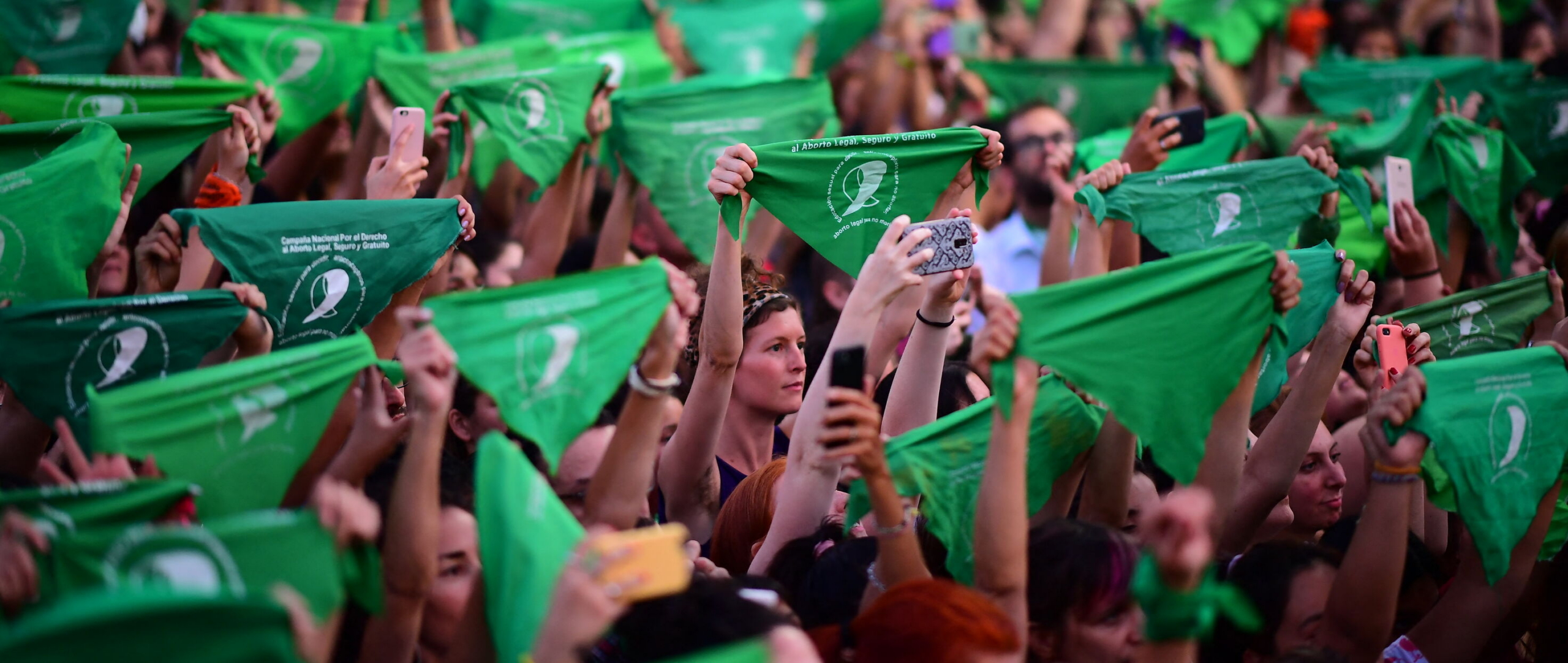
Across the world, governments and other actors are rolling back on decades of progress on gender equality, including access to abortion. But people are fighting back, determined to protect the rights so many have fought so hard to achieve.
As the Commission on the Status of Women holds its 70th session, three courageous human rights defenders from Burkina Faso, Poland and the United States share their strategies to protect access to abortion, their hopes for the future and the reasons why they believe that, despite the many increasing challenges, humanity must always win.
Cécile Yougbare, activist in Côte d’Ivoire: “I refuse to let women die from clandestine abortions when solutions exist”
I am a human rights defender. I specialize in challenges related to women’s health because several factors, such as unsafe abortions, continue to cause preventable deaths among girls and women.
For 20 years, both through my community and professional commitments, my fight has focused on women’s rights and sexual and reproductive health rights, including access to safe abortions, working for the organisation Médecins du Monde.
Abortion rights advocates face many challenges, including psychological and physical violence. Abortion still is a taboo subject that carries a lot of stigma. Even where the law allows it in countries such as Benin, social and religious stigma persists.
I come from a very religious, Catholic family. In my family, we were taught about the Church and prayer, and many of my relatives who are priests and nuns expect us to embody the virtue of people who do not encourage abortion. When you go against these “family values” and beliefs, you can be subjected to personal attacks and psychological violence. However, my faith does not prevent me from working for social justice and saving lives by reducing preventable deaths due to unsafe abortions.
Challenges
Legal frameworks are restrictive and sometimes contradictory, which often leads to delays or a total lack of care.
The rollback on funding is also a great challenge. Most funds for humanitarian organizations today explicitly exclude abortion or impose restrictions while anti-rights movements receive increasing support. The fear of losing funds and insecurity overall is forcing many activists to self-censor.
Advocacy is one of our main strategies, complemented by evidence gathering. We collect evidence on maternal deaths to show the authorities that people are dying from preventable causes.
At the community level, we work to simplify legal language to transform a taboo subject into one of public health and human dignity.
Inspiration
My commitment is fuelled by the stories of women who have survived clandestine abortions and by the gaze of young women who realise that they finally have the right to decide for themselves.
My motivation is simple: I refuse to let young women die from clandestine abortions when solutions exist. I am very proud to be an advocate, because defending sexual and reproductive rights means defending human dignity, freedom of choice and equality.
Kinga Jelińska, activist from Poland: “We are creating a different way to approach health care, based on trust and dignity”
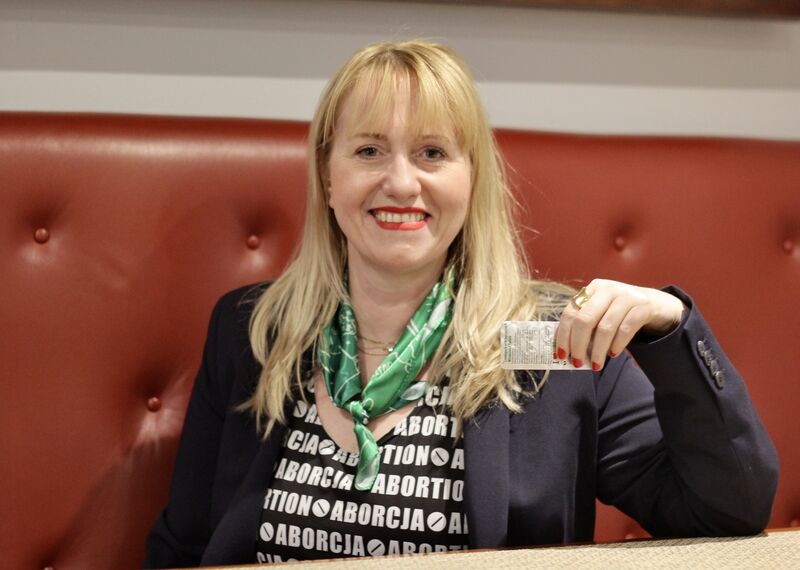
I live in Amsterdam, Netherlands, although I am originally from Poland.
In Poland, abortion was something hidden. In the Netherlands, it is available until 22 weeks of gestation. This made me realise that things could be done differently and motivated me to work for abortion to be accessible to all. I have always been a human rights activist, and women’s rights is something very close to my heart and soul.
A faulty paradigm
There is something fascinating about working on abortion because trying to regulate it doesn’t make sense. The whole paradigm seeks to exclude someone.
Limiting access to abortion has to do with politics, stigma, patriarchy and misogyny. When safe abortions are denied, people resort to unsafe methods, which are often deadly.
Reclaiming power
I work with the international feminist activist organisation Women Help Women.
We focus on self-managed abortion because it is a practical game changer, but also a political project of autonomy to fight against patriarchy and medicalisation.
We run a global online support service and send the medicines (Mifepristone and Misoprostol) to those who request them from us all over the world. In my country, Poland, we are the largest provider of abortion care. In 2024, the government reported 128 abortions were carried out. In contrast, we hear from 130 people a day. We are creating a different way to approach health care, based on trust and dignity.
Politics of care
We are human rights defenders. If someone says to you, “I need help,” it would be absolutely inhumane to say, “I’m not going to help you.”
A colleague in Poland, Justyna Wydrzyńska, had a criminal court case for assisting with an abortion that did not even take place. This exposes the crisis in the system because it criminalises empathy. In Poland, there is constant harassment of abortion rights defenders and no political will to protect us. It’s about harassing us to the point of exhaustion.
Organizations like Amnesty International act as both watchdog and amplifier — they expose human rights violations and make sure the world cannot ignore them. Access to safe abortion, including self-managed abortion, is not a grey zone or a political debate; it is a clear human rights issue rooted in bodily autonomy, health, and dignity. Amnesty helps ensure that this reality is named, documented, and defended at a global level.
The belief that we can imagine and do things better motivates me. My recipe for sustainable activism is having positive imagination mixed with a little bit of anger.
We have the tools and knowledge to provide good care. If we walk together towards the feminist practice of self-managed abortion, we can make a difference. I am very proud to be a human rights defender and abortion provider. It is about autonomy, care, support and solidarity.

I’m the co-executive director, alongside Nikki Madsen, of the Abortion Care Network. We are the only membership organisation for independent abortion providers in the United States. ACN is an organisation, and the independent abortion providers are the human rights defenders as they deliver the majority of publicly available abortion care in the country, along with their allies.
A devastating situation
Since the fall of Roe vs Wade (the ruling that guaranteed the right to abortion in the United States), the situation is devastating: 100 abortion clinics have closed, and only 14% of US counties have an abortion provider.
The ruling created a state where abortion is essentially banned for a large number of people, especially those who are already marginalised: racialised people, low-income people, people with disabilities, and those living in rural areas. The system in the US has always been designed to serve the wealthy white elite, and the rest of us have been left behind.
The bans and constant harassment are working as they were intended: making abortion access more difficult, risky, expensive, inequitable, and now in some cases criminalized.
People are now forced to travel extreme distances, often thousands of miles, which takes time, money, and resources.
There is also a growing concern about digital surveillance and the legal risks involved in traveling out of state to receive care. This adds a layer of fear and insecurity.
Independent clinics are our ‘front line.’ They are the constant target of attacks, protests, and harassment.
Abortion is not a legal or illegal issue; abortion exists, with or without clinics.
Our primary strategy at ACN is to counteract the isolation imposed by anti-rights actors by building community. We share resources, best practices, and provide emotional support.
Our tagline is “Stronger Together,” and ACN believes that abortion providers need spaces that are designed to keep them in community with each other, normalize the care they provide, and further opportunities for the clinics, workers, and the people they serve.
A vital issue
The anti-abortion movement uses a very strong playbook of tactics to strip away the rights of people who are seen as “other.” In the US, there is a strong white supremacist movement that promotes the idea that if you are not blonde, blue-eyed, thin, able-bodied, and if you do not reproduce, you are not worthy of decent community care. I do not believe that.
Everyone deserves the opportunity to make their own decisions and to trust their own body. Reproductive health access and the right to bodily autonomy, like abortion, should be a vital issue, just like access to water, food, or decent housing.
Amnesty International is an important ally in connecting abortion care as a form of human rights work. Abortion Care Network has ally members who don’t provide abortion care, and they are crucial to the reproductive health, rights, and justice landscape, like lawyers, artists, researchers, and advocates. They also ensure that independent abortion providers feel seen and supported. Allies are critical. Amnesty International has a pivotal role to play in declaring abortion care and reproductive autonomy as a cornerstone of human rights and connecting the global story of the right to health. Amnesty International’s immeasurable reach ensures that everyone knows abortion providers are brave, resilient people, doing vital, generational work.