New briefing highlights acts of humanity and solidarity gaining momentum in the face of attacks
In the face of the global backlash against gender justice, and in the midst of the Epstein files scandal, an Amnesty International delegation led by Secretary General Agnès Callamard will call for more robust efforts to protect and advance the rights of women and girls at the 70th session of the Commission on the Status of Women (CSW70), which takes place in New York from March 9 to 19.
The Amnesty delegation will engage with UN member states, officials and civil society partners to press for strengthened access to justice for survivors of gender-based violence and meaningful accountability for its perpetrators, for protection of sexual and reproductive rights and stronger safeguards for women human rights defenders.
“This year’s Commission on the Status of Women comes at a particularly urgent time, with gender justice under attack across much of the globe and many women human rights defenders and feminist organisations unable to enter the United States,” said Agnès Callamard.
“Well-funded, highly coordinated anti-rights movements, directly supported or emboldened by the United States, Russia and too many other governments, are working to roll back decades of progress.
“Powerful states are weaponizing gender to justify repression and adoption of punitive laws. Corporate and other non-state actors are planting the seeds of moral panic by spreading hateful narratives and disinformation. Together, those forces aimed at control of women’s bodily autonomy, imposing a violent denial of rights, instilling fear and contributing to the shrinking of civic space.
“At the same time, the so-called ‘Epstein Files’ have exposed global criminal networks of the world’s most powerful men in politics, finance and culture who, for decades, have engaged with impunity in large-scale sexual exploitation and abuse of women and girls, corrupting governments, markets and societies, while entrenching abusive power. It is truly sickening to see how survivors are confronted with daunting barriers to truth, remedy and redress, as well as further victimization through the nonconsensual public disclosure of sensitive data. Grotesquely, the same structural inequality, misogyny and systemic impunity that impede their access to justice continue to shield those responsible for their abuse, as well as for wider abuse of women’s and girls’ rights the world over including the organised attacks on gender rights.
Powerful states are weaponizing gender to justify repression and adoption of punitive laws. Corporate and other non-state actors are planting the seeds of moral panic by spreading hateful narratives and disinformation. Together, those forces aimed at control of women’s bodily autonomy, imposing a violent denial of rights, instilling fear and contributing to the shrinking of civic space.
Agnès Callamard, Amnesty International’s Secretary General
“CSW70 presents a critical opportunity for women human rights defenders, gender activists and member states to resist the systemic attacks on gender justice and women’s rights by naming the forces and actors behind the attacks, actively organising against them through collective actions and ensuring that accountability mechanisms can function as intended, without fear or favour.”
New briefing demonstrates global resistance
In a new briefing published today, Amnesty International highlights how, in one of the most challenging periods for women’s rights in recent history, global resistance against governments’ attacks on gender rights and their suppression of dissent is gaining momentum.
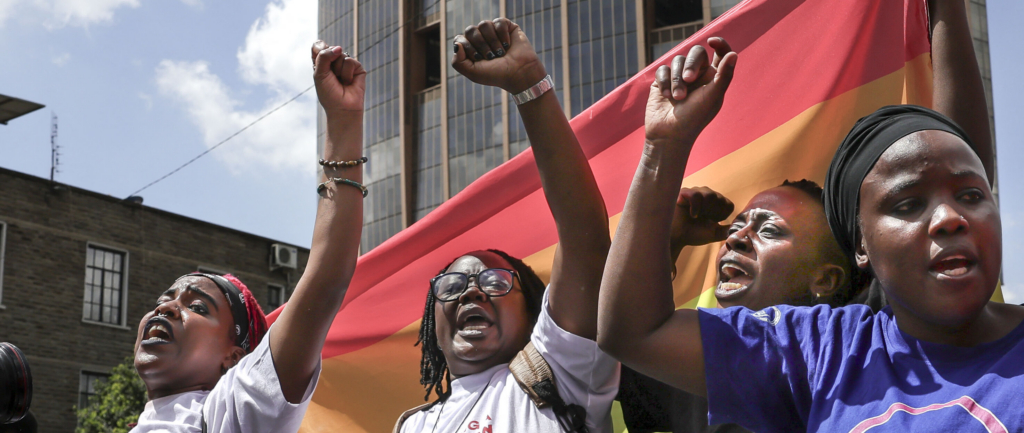
“The last year has shown that even when states fail in their duties to deliver, the collective power of communities can still defend, uphold and advance gender justice. Far from accepting defeat, or cowering to those threats, women, girls, LGBTI people and those who support them are standing tall and stepping up their work to expose, denounce and resist human rights abuses,” said Agnès Callamard.
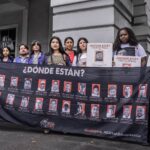
“We are witnessing thousands of everyday acts of courage, leadership and solidarity. Our briefing documents the dedication of brave individuals fighting, for example, to secure a landmark court ruling affirming access to abortion for rape survivors in Malawi, demanding accountability for Israel’s genocide against Palestinians, and resisting censorship in Afghanistan and China. Others are battling to extend sexual and reproductive rights in Latin America and ensure LGBTI people can exercise their rights to peaceful assembly in Hungary.
“Their examples show us that another world is possible. Their voices are particularly important this year, when due to safety concerns, border violence, visa and access restrictions alongside the funding crisis caused by the slashing of aid, so many partner organizations and human rights defenders cannot be present at CSW in New York. These pervasive inequities are severely limiting meaningful access to multilateral spaces.”
The last year has shown that even when states fail in their duties to deliver, the collective power of communities can still defend, uphold and advance gender justice. Far from accepting defeat, or cowering to those threats, women, girls, LGBTI people and those who support them are standing tall and stepping up their work to expose, denounce and resist human rights abuses
Agnès Callamard
The briefing, “Humanity Must Win: and it does when we stand together for gender justice”, details campaigns and initiatives from across the world that, despite systematic backlash by authorities, are nonetheless exposing human rights violations, promoting solidarity and driving progress towards accountability and justice.
The briefing outlines those human rights initiatives, including in:
- Afghanistan, where women journalists, including Zahra Joya, founder of Rukhshana Media, continue to resist the Taliban’s sweeping restrictions that have erased women from public life. Their reporting gives visibility to women who cannot speak openly, from the protesters who write their messages of resistance on walls in Kabul, to survivors of violence whose stories rarely reach the outside world.
- Burkina Faso, where, in 2025, following persistent civil society campaigning, the country adopted long-awaited reforms setting the minimum age of marriage at 18 and establishing consent between the two parties as the basis for any marriage.
- Gaza, where the brave work of human rights organizations helped expose the genocide committed by Israel, a step in the long road to justice. In March 2025, the UN Commission of Inquiry concluded that Israel has systematically used sexual, reproductive, and other gender-based violence against Palestinians and carried out “genocidal acts” by destroying women’s healthcare and reproductive health facilities and blocking access to essential care.
- Hungary, where around 300,000 people defied the authorities’ ban of the Budapest Pride march in June 2025. Under new legislation, the authorities can ban any assemblies advocating for LGBTI+ rights and depicting LGBTI themes, fine participants, criminalize organisers and identify marchers through facial recognition technology.
- Malawi, where, in 2025, Malawi’s High Court affirmed that denying a 14-year-old rape survivor access to a safe abortion violated her rights under the Gender Equality Act, in a landmark ruling that sets an important precedent in a country where abortion remains largely criminalized.
- Latin America, where activists from across the region have continued to defy attacks and attempts to roll back on hard won sexual and reproductive rights, particularly access to safe abortions.