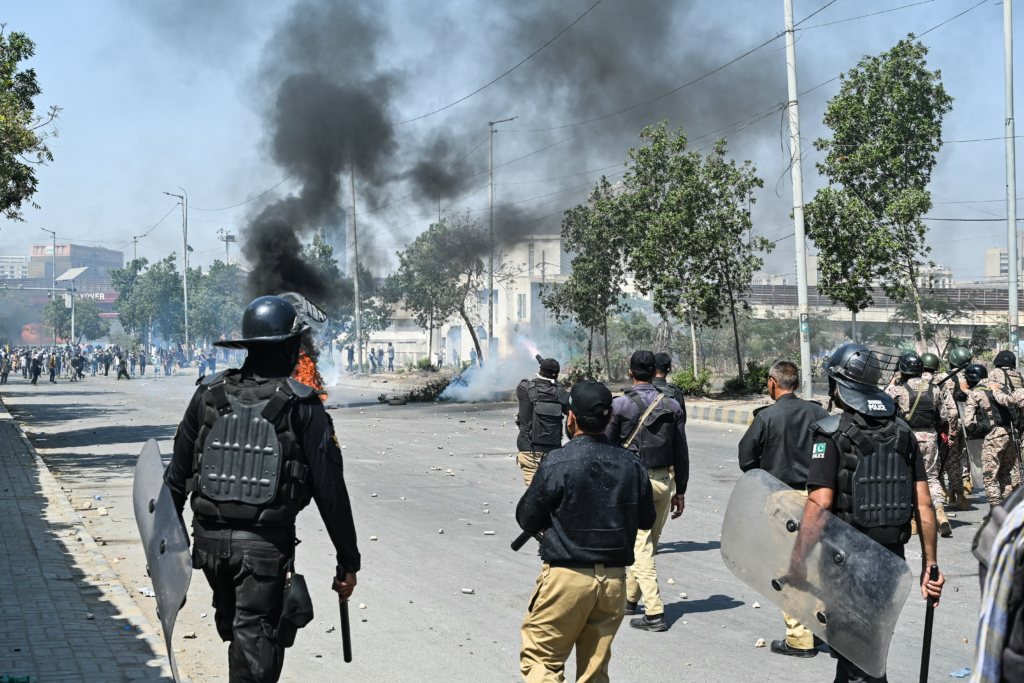
Responding to the deaths of at least 26 people during protests that erupted across Pakistan on 1 March following the killing of Iran’s Supreme Leader, Ali Khamenei, in US-Israeli attacks on Iran, Babu Ram Pant, Amnesty International’s Deputy Regional Director for South Asia, said:
“The killing of protesters and reports of the use of lethal ammunition by security forces against these assemblies raises serious concerns about unlawful use of force. Protesters have a right to gather peacefully and express dissent, even in moments of heightened tension. During such crises, security forces must demonstrate their commitment to protecting life and safeguarding peaceful assembly.
“Even in instances where some protesters turn violent, law enforcement must assess the situation on a case-by-case basis, exercise restraint, and use force only where absolutely necessary. Any force must be proportionate to the seriousness of the offence and legitimate objective, and used solely against those engaged in violence. Lethal force may only be used as a last resort and only be targeted against those posing an imminent threat to life. Authorities must act with restraint to avoid further serious injury and loss of life during future protests. Further, they must take all measures to fulfil their positive obligation to facilitate the right to freedom of peaceful assemblies.
Even in instances where some protesters turn violent, law enforcement must assess the situation on a case-by-case basis, exercise restraint, and use force only where absolutely necessary
Babu Ram Pant, Amnesty International’s Deputy Regional Director for South Asia
“Amnesty International calls for a thorough, independent, impartial and effective investigation into the deaths and injuries and the use of force deployed by security personnel. The families of those killed and the people injured have the right to a remedy.”
Background
Major protests took place in the cities of Skardu, Gilgit, Karachi, Islamabad, Lahore, and Peshawar on 1 March.
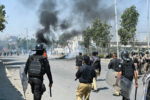
It has been reported that at least ten protesters were killed and 96 injured outside the US Consulate in Karachi after protesters breached the premises. Various reports suggest that gunfire was used against protesters, and many of those brought to hospitals had gunshot wounds. At least two protesters were killed and over 30 injured near the Diplomatic Enclave in the capital Islamabad. Protesters reported the use of kinetic impact projectiles and tear gas canisters. Fourteen people, including a solider, were killed in Skardu. In Skardu and Gilgit, protesters set alight the offices of UN Military Observer Group in India and Pakistan (UNMOGIP). In Skardu, a school and some municipal offices were also set ablaze.
Subsequently, all public gatherings were prohibited in Sindh and Punjab provinces and in Islamabad. A curfew was imposed in Skardu city, and the Pakistan Army has been deployed.