The Algerian authorities must ensure the upcoming retrial of 94 people in connection with the August 2021 events in the Kabylie region, in northeastern Algeria, adheres strictly to international fair trial standards without recourse to the death penalty and excluding any torture-tainted statements, Amnesty International said today.
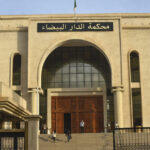
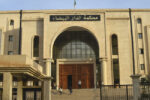
On 1 March 2026, 94 individuals will face trial again by the Algiers Court of Appeals after the Supreme Court overturned a previous appeal ruling related to the lynching of an activist, devastating wildfires and other violence in the Kabylie region in August 2021. On 24 November 2022, 56 people were convicted of involvement in acts including membership in an organisation committing acts of sabotage, premeditated murder, torture, and arson. They were sentenced to death in proceedings marred by uninvestigated torture claims, and politically motivated charges.
During the initial trial, at least five defendants said they were subjected to torture and other ill-treatment in detention, including the use of electric shocks, attempted waterboarding, and threats of rape, to extract statements under duress, which were used to convict them. Despite this, the court failed to investigate the claims, with judges instead telling defendants it was their own responsibility to file complaints.
“The flawed investigation and grossly unfair trial that led to these callous death sentences are a stain on Algeria’s justice system. The new trial represents an important opportunity for the Algerian authorities to end the travesty of justice, redress past violations and ensure accountability without recourse to the death penalty,” said Diana Eltahawy, Deputy Regional Director for the Middle East and North Africa at Amnesty International.
“Justice for the terrible violence of the events of August 2021 must mean a fair trial fully in line with international standards. All allegations of torture and other ill-treatment must be thoroughly, impartially, transparently and effectively investigated and forced ‘confessions’ extracted under torture or duress must be excluded from evidence. Individuals detained solely for the peaceful exercise of their human rights must be immediately released and charges against them dropped.”
The new trial represents an important opportunity for the Algerian authorities to end the travesty of justice, redress past violations and ensure accountability without recourse to the death penalty
Diana Eltahawy, MENA Deputy Regional Director
Amnesty International analysed the initial ruling and interviewed three lawyers and four family members who asked to remain anonymous. According to the information gathered, the prosecution of at least 10 defendants sentenced to death appears to solely be based on their political affiliations or alleged ties to the Movement for the Self-determination of Kabylie (MAK), a political opposition group labelled as “terrorist” by the Algerian authorities. No evidence has been presented by the prosecution indicating their presence at the scene of the crime and/or linking them to acts of violence. Four of the 10 defendants were outside of the country at the time of the events, and six of them were sentenced in their absence.
Furthermore, the court failed to allow defence lawyers to cross examine prosecution witnesses including police officers, relying instead on written testimonies. In August 2021, Algerian television channels aired videos of 12 of the defendants in which they appeared to ‘confess’ their involvement in the lynching or their ties with the MAK, violating their rights to presumption of innocence and against self- incrimination.
Amnesty International is calling on the Algerian authorities to ensure the right to a fair trial, including by the rights to a fair and public hearing, to adequate defense and to examine witnesses.
Background
Algeria has not carried out any executions since 1993. Amnesty International opposes the death penalty unconditionally, in all cases and under any circumstances. Under international law, the imposition of the death penalty following unfair proceedings renders the punishment arbitrary.
Since April 2021, the Algerian authorities have extensively used Article 87 bis of the Penal Code and overbroad terrorism accusations to prosecute activists, human rights defenders, and journalists. Many have been targeted for demanding political change or for their alleged ties to the MAK or Rachad, both opposition groups which were designated as “terrorists” in 2022 through a process that runs counter to international human rights standards.
The current case involves the August 2021 lynching of activist Djamel Ben Smail in Larbaa Nath Irathen and the fires that spread throughout the Kabylie region, resulting in at least 90 deaths. On 24 November 2022, as shared by the public prosecutor’s office at the Court of Algiers, a criminal court in Algiers sentenced 49 individuals to death after convicting them on charges including terrorism, murder and setting fires, in addition to at least six people sentenced to death in their absence. The court issued sentences ranging from two to ten years in prison against 28 others. Seventeen people were acquitted. While the Algiers Court of Appeals maintained 38 death sentences in October 2023 and retained prison sentences for 30 others and acquitted 26 people, the Supreme Court overturned the appeal ruling in cassation on 28 November 2024 and ordered a retrial. Among the defendants, 52 are currently detained.