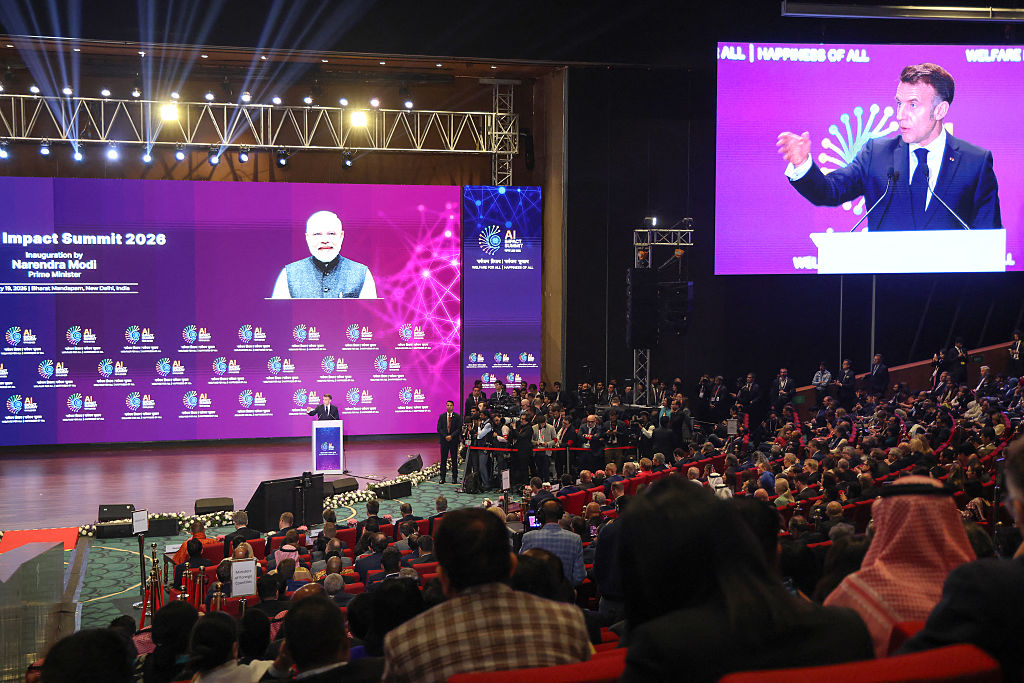
Responding at the conclusion of the five-day AI Impact Summit that took place in New Delhi, India, Erika Guevara Rosas, Senior Director of Research, Advocacy Policy and Campaigns at Amnesty International, said:
“It is unfortunate that the rhetoric of the AI impact Summit stood in stark contrast with the realities of harmful deployment of artificial intelligence (AI) systems in India, where these systems are powering a state-led agenda of authoritarian practices that is entrenching state and corporate control. The civic space is shrinking at an unprecedented speed and marginalized communities impacted by AI systems face constant harm and are demonized.
“While India was lauded by world leaders for its technological progress, the human rights concerns arising out of technology deployment in the country were papered over. Amnesty International’s own research has shown that the deployment of harmful technologies such as facial recognition and automation in the public sector have threatened the right to privacy and social protection in India and have led to discrimination and exclusion of marginalized communities. Systems of mass surveillance are being expanded in an already pernicious context of rights abuses.
“The Summit’s push on sovereignty, innovation and ‘democratisation’ feeds a global trend of turning AI into a race predicated on power accumulation and economic growth at all costs, rather than the collective global action needed to interrupt this. Achieving such a goal would only be possible if the Summit included strong civil society and impacted community engagement on rights concerns which was woefully absent from the start.
“To date, AI summits have failed to advance the necessary regulations for a digitally safe future. If there is one clear takeaway from the India AI Impact Summit, it is that these gatherings have time and again proven largely irrelevant and ineffective at advancing binding rights protections or the safeguards necessary in the context of immense AI investment. Each year and at each summit, the gulf between state action to safeguard people’s rights and wellbeing, and an increasingly unchecked powerful AI industry keeps growing. They have advanced techno-solutionist narratives and soft governance instruments, where industry and government deepen their alliances.
“States must urgently course‑correct the current AI trajectory, adopt binding guardrails that draw clear prohibitions around technologies that are incompatible with human rights, and create meaningful mechanisms for public participation so that people can genuinely shape the technological futures they want.”
Background
The India AI Impact Summit took place from 16 to 20 February in New Delhi, India.
In 2024, Amnesty International documented how public sector automated system in India’s state of Telangana excludes thousands of people from accessing social protection measures, including those related to food security, income, and housing.
In 2021, Amnesty International investigated the human rights impacts of facial recognition technology in Hyderabad, India.