- HelpAge International survey reveals toll on physical and mental health of older people
- Severe shortages of nutritious food, medicine and shelter contributing to inhumane conditions
- “The rights and needs of older people in Gaza must not be ignored” – Erika Guevara-Rosas
Older people in Gaza are suffering an overlooked physical and mental health crisis amid Israel’s ongoing blockade of aid and essential medicines and the recent ban on humanitarian organizations, new research by HelpAge International and Amnesty International has revealed.
In a health survey by HelpAge International, older people said that food scarcity had caused them to skip meals, including to ensure other family members could eat, while others said they had to ration medications for serious health conditions because of lack of access.
Internally displaced older people also described to Amnesty International how their lack of access to nutritious food, adequate shelter and healthcare was causing extreme harm due to the continuing blockade imposed by Israeli authorities. Interviewees had been displaced multiple times since October 2023.
“During armed conflict, older people’s needs are often overlooked. In Gaza, older people are enduring an unprecedented physical and mental health collapse as a direct result of Israel’s deliberate infliction of conditions of life calculated to bring about the physical destruction of Palestinians in Gaza” said Erika Guevara-Rosas, Amnesty International’s Senior Director of Research, Advocacy, Policy and Campaigns.
“HelpAge International’s survey reveals how Israel’s ongoing unlawful, cruel and inhumane restrictions on the entry of life-saving aid have impacted older people’s ability to access critical healthcare and medications and has limited their access to nutritious food and to adequate shelter.
“The rights and needs of older people in Gaza must not be ignored. Many continue to endure degrading living conditions and desperate humanitarian situation following the destruction of their homes and repeated displacements. Israeli authorities must immediately and unconditionally lift their blockade, and allow the unhindered entry of essential supplies, including medicine and shelter materials.”
During the winter months, Palestinians in Gaza – most of whom live in dilapidated tents or makeshift shelters – have also had to endure overflowing sewage and floodwaters, and have been exposed to heavy winds. Israel has also suspended the registration of 37 NGOs operating in Gaza and the West Bank as of 1 January. and they have been ordered to cease their operations within 60 days.
HelpAge International’s survey findings
HelpAge International surveyed 416 older people in Gaza, and published its findings in a new report Pushed Beyond Their Limits: The survival of older people in Gaza, today. Amid severe food deprivation and the collapse of essential services, older people face distinct and often overlooked risks. Their needs remain largely invisible. Key findings from the HelpAge International survey include:
- Older people are living in extreme shelter deprivation: 76% of those surveyed live in tents, which are often severely overcrowded; 84% said their current living conditions harm their health and privacy.
- Displacement has been constant and destabilizing: 79% have been displaced more than three times since October 2023, disrupting family support and increasing isolation.
- Health conditions are widespread and largely unmanaged: Despite high prevalence of chronic pain and disease, access to medication is extremely limited, with 42% able to obtain it only “sometimes” and 18% “rarely”. 68% of respondents reduced or stopped treatment due to lack of stock. Overall access to healthcare remains low, with just 17% reporting full healthcare availability, and treatment for chronic conditions identified as the most frequently missed service at 31%.
- Food insecurity is acute and can be life-threatening: While half of respondents said accessing assistance was easier since the ceasefire, 11% still had eaten no meals in the previous 24 hours; 48% had reduced their own intake to ensure others could eat.
- Mental health strain is severe and directly affects nutrition: 77% said that sadness, anxiety, loneliness, or insomnia had reduced their appetite and impacted their wellbeing.
“Life has become even more miserable”
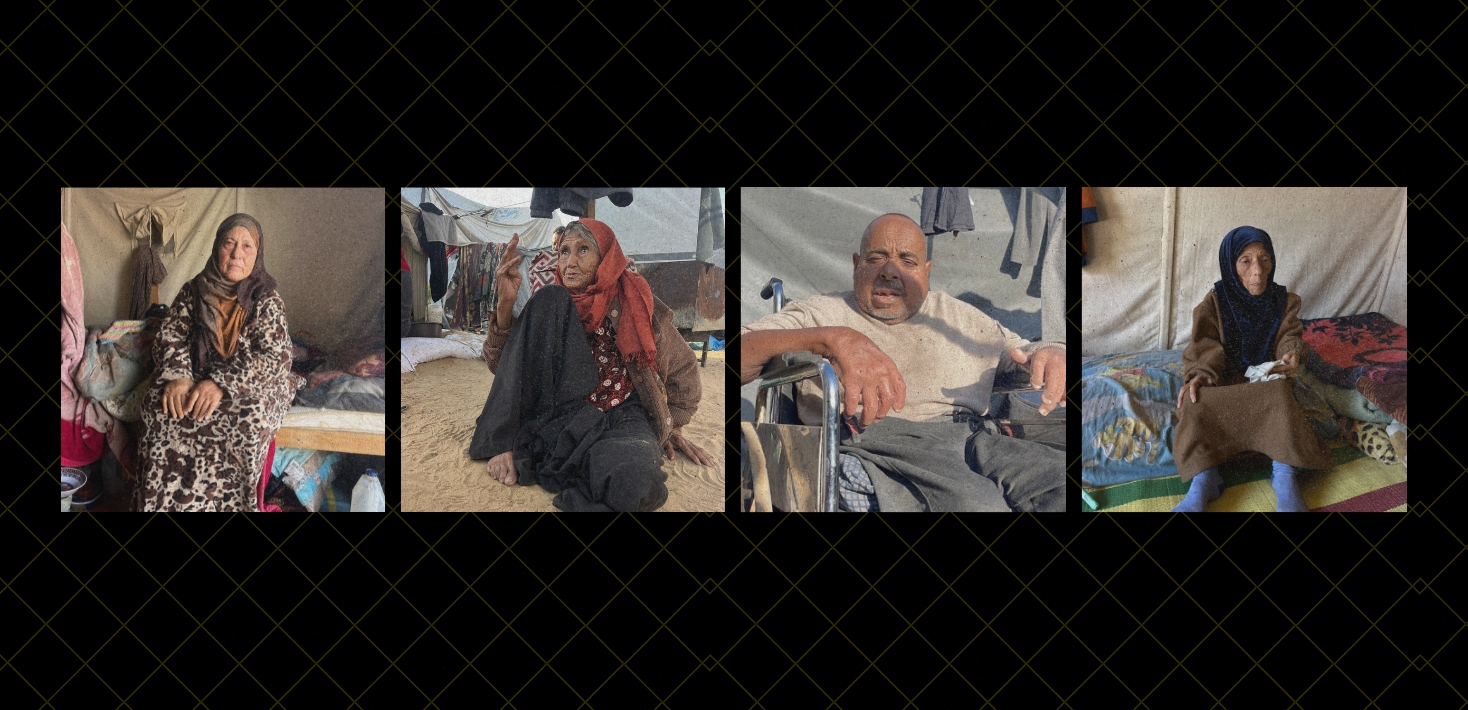
These findings were corroborated by Amnesty International’s research, which included interviews with 12 older people from all regions of the occupied Gaza Strip who remain in tents in internally displaced persons (IDP) camps in the Zawayda area, where living conditions are extremely challenging. In most cases, a relative facilitated communication with the older person, many of whom had a disability or needed assistance using a smartphone.
Interviewees said they were forced to stop or ration medications for existing chronic illnesses, which were either unavailable or had increased by three or four times in price. According to the World Health Organization, as of October 2025 fewer than 14 of Gaza’s 36 hospitals were partially functioning, while less than one-third of rehabilitation services were operational, severely limiting older people’s access to care.
Some older people had lost significant amounts of weight, and most relied on community kitchens that did not always provide adequately nutritious food. The terrain in the IDP camps, often uneven and sandy, prevented those who used wheelchairs or walkers from moving freely, rendering them fully dependent on relatives.
Mohammed Bili, 61, has been displaced seven times since October 2023. He requires dialysis three times a week. However, the facility he previously visited has been destroyed, and he now gets dialysis only twice a week for shorter sessions. He struggles to use his wheelchair in the camp’s terrain, and has lost nearly 20kg.
He told Amnesty International’s researchers: “I struggle with extreme stiffness in my arms and weakness in my muscles due to the fact that I can’t access dialysis as frequently as I need.”
Samira Al-Shawa, 88, had used a walker to move about independently. Now she is living in an IDP camp, where the sandy terrain means she is unable to walk at all. She spends most of her time lying on a makeshift bed in her tent. Charity kitchens provide her family with food, but it is insufficient and lacks adequate nutrition. She has lost about 20kg since October 2023.
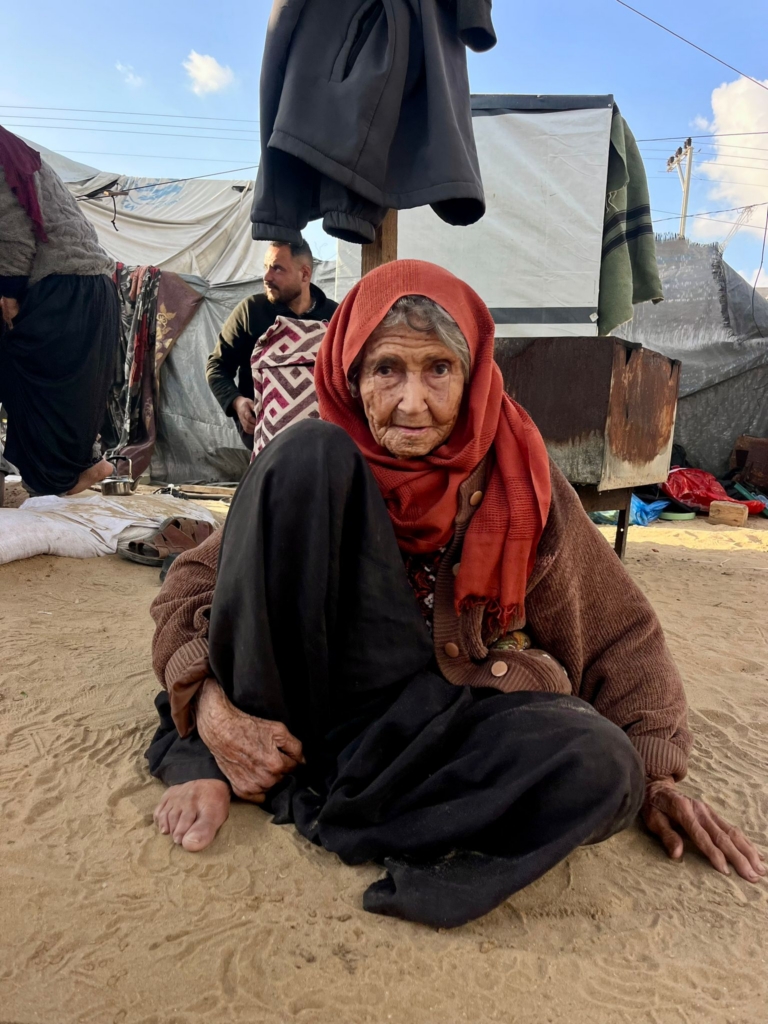
Sadiqa Al-Barrawi, aged approximately 90, has been displaced three times since October 2023. She is currently living in a tent in Salam IDP camp with her son, his wife and their four children. While going to use the toilet one night in January 2025, she fell and injured herself, and now cannot stand or walk. She told Amnesty International: “Since then life has become even more miserable.”
Sadiqa has diabetes and high blood pressure. She has lost about 25kg and relies on food from charity kitchens. She added: “We are farmers. At home in the village, we have land and the best fresh food – and now we have nothing.”
Background
People over 60 make up about 5% of Gaza’s population. According to the Palestinian Ministry of Health, as of early December 2025, 4,813 older people had been killed in Gaza since October 2023, although this figure did not include indirect deaths due to destroyed health infrastructure, for example. According to a report by UNWRA, many older people lose connection to caregivers due to the hostilities or the upheaval of displacement. Amnesty International has documented how older people are at heightened risk in situations of armed conflict, and their humanitarian needs systemically ignored.
In December 2024, Amnesty International concluded that Israel is committing genocide in Gaza, arguing that it had carried out acts prohibited under the Genocide Convention with the specific intent to destroy Palestinians in Gaza, including killings, causing serious bodily or mental harm, and deliberately inflicting on Palestinians in Gaza conditions of life calculated to bring about their physical destruction.
Despite a reduction in scale of attacks since the October 2025 ceasefire agreement, there has been no meaningful change in the conditions Israel is inflicting on Palestinians in Gaza and no evidence to indicate that Israel’s intent to commit genocide has changed.