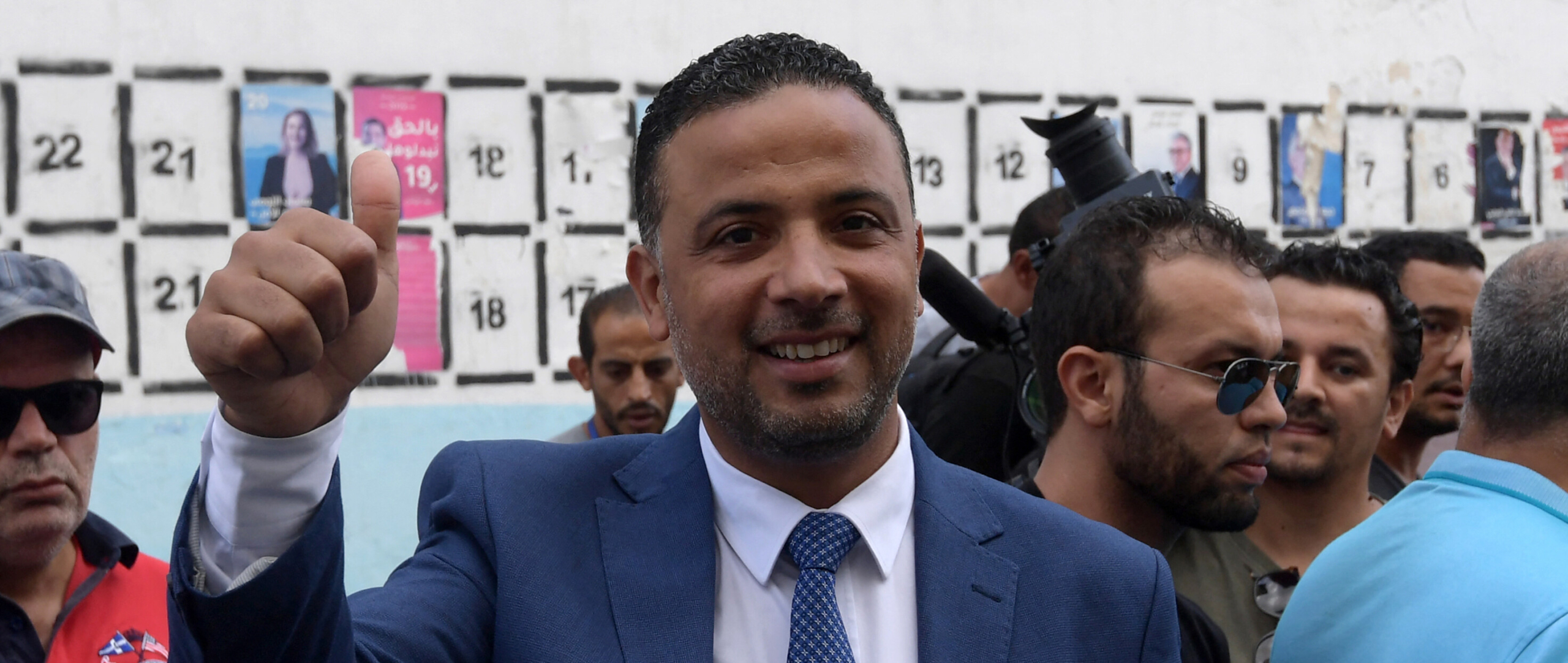
Algerian authorities must clarify the legal basis for the forced return of former parliamentarian and government critic Seifeddine Makhlouf to Tunisia on 18 January, despite the fact that he was a registered asylum seeker with the UN Refugee Agency (UNHCR), Amnesty International said today. This return amounts to refoulement, a violation under international law.
The Algerian authorities should ensure that procedural safeguards are put in place so that no other asylum seekers are subjected to such forced returns without an assessment of their protection needs under international law.
“Seifeddine Makhlouf’s forced return is a violation of the principle of non-refoulement. By handing him over to Tunisian authorities without allowing him any opportunity to contest the decision or assessing the risks he faces in Tunisia, including the risk of prolonged arbitrary detention and unfair trial, Algeria has breached its obligations under international human rights law, including the Refugee Convention,” said Sara Hashash, Deputy Regional Director for the Middle East and North Africa at Amnesty International.
The Tunisian authorities should drop all charges against him related to the exercise of his human rights.
Sara Hashash, Deputy Regional Director for the Middle East and North Africa at Amnesty International.
“This move is particularly alarming given the escalating crackdown on dissent in Tunisia, where the judiciary has been increasingly weaponized to silence political opposition. The Tunisian authorities should drop all charges against him related to the exercise of his human rights.”
Seifeddine Makhlouf, a vocal critic of Tunisian President Kais Saied and leader of the Al Karama coalition, had sought safety in Algeria in July 2024, registering as an asylum seeker with UNHCR after facing arbitrary detention and prosecution in Tunisia. After Tunisian president Kais Saied dissolved the parliament by decree and stripped parliamentarians of their immunity, a military court had arbitrarily prosecuted and sentenced Seifeddine Makhlouf, in violation of international standards that prohibit trials of civilians before military courts.
Despite his formal status as a person seeking international protection, Algerian authorities sentenced Seifeddine Makhlouf to three months in prison for irregular entry in July 2024 which he served, following which authorities placed him under arbitrary administrative detention. While in detention, despite multiple requests from him and his lawyer, Algerian authorities did not allow him to attend appointments with UNHCR regarding his asylum request.
On 18 January 2026, Algerian security forces transported him to the border and handed him over to Tunisian police, without informing him or his lawyers of their intent to return him to Tunisia; thereby denying him the right to challenge the decision.
Upon his arrival in Tunisia, he was immediately detained to serve sentences handed down in his absence. Amnesty International calls for verdicts rendered in absentia to be quashed and for a new and fair trial to be held before an independent and impartial court.
By bypassing procedural safeguards required in any formal extradition procedure and ignoring Makhlouf’s asylum seeker status, Algerian authorities have effectively colluded in the repression of political dissident in Tunisia.
Sara Hashash.
“By bypassing procedural safeguards required in any formal extradition procedure and ignoring Makhlouf’s asylum seeker status, Algerian authorities have effectively colluded in the repression of political dissident in Tunisia. This sets a dangerous precedent, signaling that bilateral cooperation now takes precedence over the most fundamental principles of international human rights and refugee law,” said Sara Hashash.
“The Tunisian authorities must ensure that his rights to a fair trial and protection from arbitrary detention are fully respected. The international community cannot remain silent while states trade away the safety of individuals fleeing persecution for the sake of political convenience.”
Algeria’s actions take place against the backdrop of a deeply concerning and ongoing pattern of collective expulsions and arbitrary detention of migrants, asylum seekers and refugees, carried out without any due process.
While Algeria has ratified the 1951 Refugee Convention, the lack of a comprehensive national asylum framework continues to leave thousands of vulnerable people without effective protection. In 2017, the Algerian government had announced the drafting of a bill on asylum which did not materialize.
The Tunisian government, for its part, has overseen a severe rollback of human rights since July 2021, with authorities dismantling human rights institutions and targeting anyone perceived as an opponent.
There has been close cooperation between the Algerian and Tunisian authorities. In August 2021, Algerian UNHCR-registered refugee Slimane Bouhafs was kidnapped from his home in Tunis and forcibly returned to Algeria where he was arbitrarily prosecuted and detained.