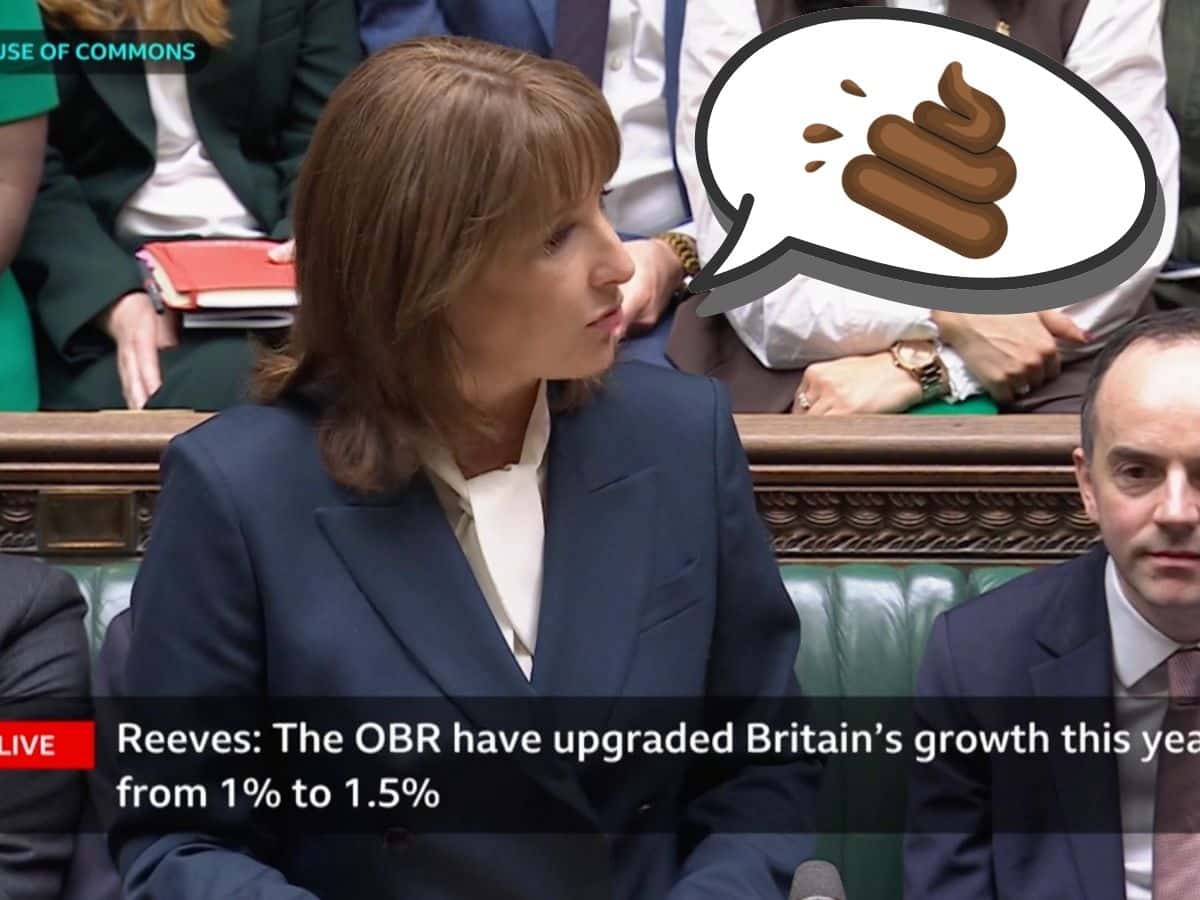
During the Autumn Budget, Rachel Reeves completely failed to mention housing or homelessness (except for the mansion tax, of course). This shows us exactly where these issues sit on her list of priorities.
But is there any wonder she didn’t mention it?
The Office for Budget Responsibility (OBR) predictions for November 2025 on the housing market are extremely depressing.
Firstly, mortgage interest rates are set to increase from 3.7% to around 5% by 2029.
The OBR forecast a significant increase in mortgage rates by 2029. The whole Housing section of the Doc is a very downbeat read. #Budget
— Told You So (@TYS20212) November 26, 2025
But in 2025, how many people can even afford a mortgage or have the savings for a house deposit? Of course, the Renters’ Rights Act recently received royal assent. But there was not a single mention of affordable housing, leaseholds, or funding for homelessness in this year’s budget.
Reeve’s budget speech ignores homelessness figures
Does Reeves think that if she ignores homelessness, it will eventually disappear?
This is not a renters’ budget.
With housing benefit still frozen, many low-income families will struggle to afford their rent.
But we welcome the increase to taxes on landlords’ income. Those with the broadest shoulders should bear a bigger load.
— Renters’ Reform Coalition (@RentersReformCo) November 26, 2025
A recent report from Crisis found that if things do not change, homelessness figures will continue to rise – hitting 361,400 by 2041. That is 66% above 2020 levels.
However, the report provided clear solutions to address the problem, both in the long and short term. Of course, Reeves did not implement any of these – never mind just mention them in the budget.
It states that in the short term, the most effective policies for reducing homelessness are an increase in social lettings, Housing First, improvements in the welfare system, such as:
ending 5 week wait for Universal Credit, minimising debt deductions, removing the Benefit Cap and Two Child Limit, and higher personal allowances particularly for younger singles
And in the longer term:
the largest reductions would result from those same welfare benefit and direct rehousing/allocations measures, alongside restoring Local Housing Allowance (LHA) rates to the 30th percentile of local rent distributions and indexing to inflation, increased supply of social rented housing, enabling a reduction in hostel placements, and replicating best practice in homelessness prevention.
But Reeves failed to address any of these issues.
@UKLabour Unfortunately nothing in this budget to tackle homelessness. No increase to LHA rates. Shame on the Govt
— Fdhuss (@Afhussain128936) November 26, 2025
Temporary accommodation
The OBR also mentions the rising demand for temporary accommodation, which is pushing up the cost of that accommodation.
The number of households in temporary accommodation continues to rise, with the latest figure standing at 128,000. This means that, as of the last count, there were approximately 172,000 children living in temporary accommodation.
Over half of these are in London, and most are self-contained. However, one in six are bed and breakfasts, hotels, or hostel rooms. By the end of 2024, 8,000 households with children were still staying in highly unsuitable bed and breakfasts.
Between 2022 and 2025, local authorities saw the cost of housing services linked to temporary accommodation rise by an average of 20% every year.
The OBR document also notes that these costs will continue to rise as demand for asylum accommodation moves away from central government-funded accommodation to that provided by local authorities. It states:
Demand for asylum accommodation has also grown and is now expected to cost £15.3 billion over the next 10 years, revised up from the Home Office’s previous estimate of £4.5 billion.
Additionally, local authorities are struggling with rising safety and maintenance costs, but revenue growth is not increasing at the same rate.
Mansion tax
Reeves did mention the Mansion Tax – which of course does not affect most of us.
The Mansion Tax is confirmed.
A levy on homes over £2m could raise around £0.4bn apparently…a small sum in the context of the housing budget.Can’t see this raising any money at all to be honest when you factor in the secondary impacts.
The real risk is behavioural. If…
— Tom Jewell (@TOMJEWELL8) November 26, 2025
The tax will apply to properties above £2m from 2028, with a property income tax increase of 2% from 2027.
The annual charges will be an additional £2,500 for properties worth more than £2m, and £7,500 for those worth £5m or more, and will be collected alongside council tax.
However, social media users pointed out that it won’t make much financial difference in the context of the housing budget, and buyers might just delay buying until there’s a new government.
Budget speech falls flat
Reeves’ failure to mention homelessness, affordable housing or anything that could be of use to renters was highly disappointing. Without increasing Local Housing Allowance or Housing Benefit, homelessness figures will only continue to rise, along with the number of people needing temporary accommodation. Again, this will only cost the country more.
Let’s face it, by investing money in affordable housing and homelessness services now, Reeves could have saved some money in the future. But this isn’t even about money. Everyone deserves a safe, warm and stable home – and this government is failing to deliver that.
Featured image via HG